
Our registered ergonomists are ready to help. Call us at (613) 730-1074 or book a consultation today.
So you've got an ergonomic chair now what? Your guide to adjusting it the right way
Feb 19
Introduction
Do you find yourself in one of these categories?
Finally purchased yourself that great ergonomic chair with all the features
Received an ergonomic chair from your workplace
Got a new chair following an ergonomic assessment
You may be stuck on what to do next to really optimize your comfort in your new chair. Adjusting your chair is easier than you think and has significant impacts on your comfort when sitting at your desk. If your chair isn’t adjusted to fit you, it is likely not providing the full benefits to minimize discomfort or pain. This is something an ergonomic assessment often reveals: even the best chairs can fall short if they aren’t set up correctly for your body.
What adjustments should you make after an ergonomic assessment recommends a new chair?
After receiving a new ergonomic chair, whether purchased personally, provided by an employer, or recommended through an ergonomic assessment, you should adjust seat height, seat depth, backrest height, and armrest height to match your body’s proportions. Each of these settings directly impacts your posture, comfort, and long-term musculoskeletal health.
Generally speaking, most ergonomic chairs should have levers and adjustments in a similar placement. When going to adjust your chair, you should look for the following:
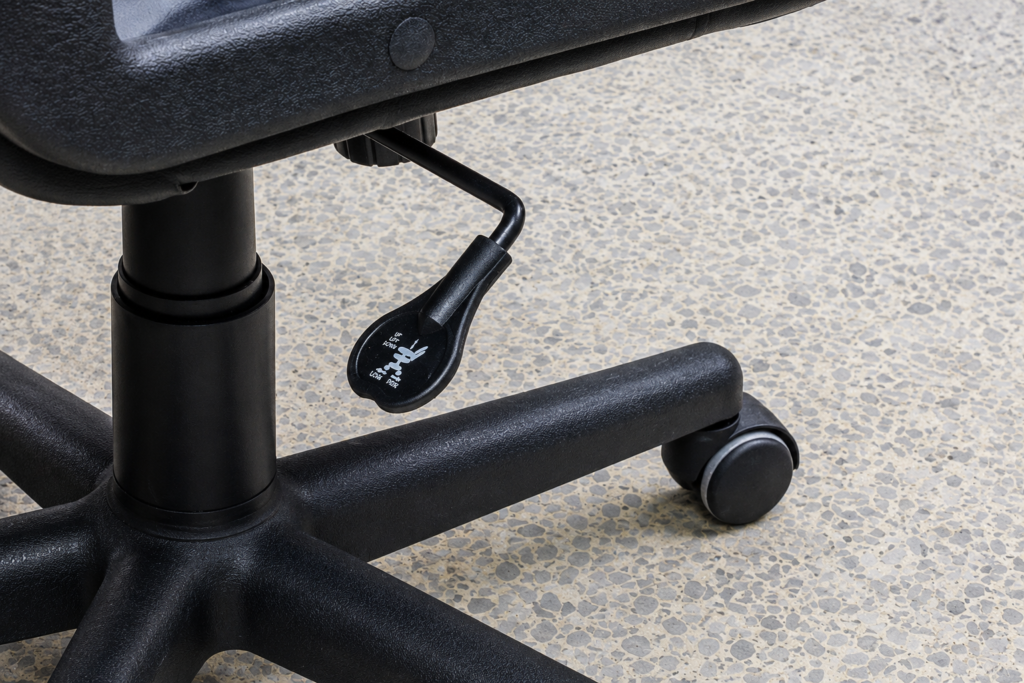
Seat height — usually found on the right side of the chair when sitting in the seat, typically the center lever
Seat depth adjustment — typically a handle under the front of the seat pan or a small lever to the right or left
Backrest height — there may be a lever at the back right of the backrest that can be released to move the backrest up/down. Some backrests have a ratchet system, so you just need to lift the backrest to adjust.
Armrest height — pull up on the lever under the arm caps to raise or lower the armrest height
When making these adjustments you want to be sure that the seat height is adjusted with feet comfortably on the floor, knees at ~90 degrees. There should be 1–2 fingers width of space between the seat pan and back of the calf. The backrest should be adjusted so that the lumbar support in the chair is positioned in the natural curvature of your low back. The armrests should be positioned just below the forearms with shoulders relaxed and elbows at 90 degrees, if your armrests have a lateral glide adjustment, be sure to pull them in close to the upper body (or rotate them).
Have a look at this to better help you with your chair adjustments. If you still can’t get it quite right, contact us to set up an ergonomic assessment with one of our Ergonomic Consultants!
Conclusion
A high-quality ergonomic chair is only as good as its setup. Taking the time to adjust seat height, depth, backrest, and armrests to fit your unique body can make a world of difference to your daily comfort and long-term health. If you’ve worked through these adjustments and still experience discomfort, that’s a clear sign that a professional ergonomic assessment is the right next step.
Injury Prevention Plus offers expert ergonomic assessments for individuals and workplaces, helping you get the most out of your chair and your entire workstation setup. Book your ergonomic assessment with Injury Prevention Plus today and work with a certified Ergonomic Consultant who can fine-tune your setup for lasting comfort and injury prevention.
Frequently Asked Questions
What is an ergonomic assessment, and do I need one for a new chair?
An ergonomic assessment is a professional evaluation of your workstation setup, including your chair, desk, monitor, and posture. If you’re unsure how to adjust your new chair or still experience discomfort after adjusting it, an ergonomic assessment can provide personalized guidance.
How do I know if my ergonomic chair is adjusted correctly?
Your chair is correctly adjusted when your feet rest flat on the floor, your knees are at roughly 90 degrees, there is 1–2 fingers of space between the seat edge and the back of your calf, your lumbar support aligns with your lower back curve, and your armrests sit just below your forearms with relaxed shoulders.
Can a poorly adjusted ergonomic chair cause pain?
Yes. Even the best ergonomic chairs can cause or worsen back, neck, and shoulder pain if not adjusted to fit the user. Incorrect seat height, missing lumbar support, and armrests set too high or low are common culprits.
What does an ergonomic consultant check during a chair assessment?
An ergonomic consultant will evaluate your seated posture, assess all chair adjustments relative to your body dimensions, and make recommendations for your chair, desk height, monitor placement, and any accessories that could improve comfort and reduce injury risk.
How often should I have an ergonomic assessment done?
It’s recommended to have an ergonomic assessment whenever you get new equipment, change workstations, experience new discomfort, or return to work after an injury. Annual check-ins are also a good preventive measure.
Does Injury Prevention Plus offer ergonomic assessments for home offices?
Yes. Injury Prevention Plus provides ergonomic assessments for both workplace and home office environments, including virtual options, so you can get expert support no matter where you work.
Need help improving ergonomics in your workplace?
Related Post