
Our registered ergonomists are ready to help. Call us at (613) 730-1074 or book a consultation today.
Five Ergonomic Habits to Build This Summer
Aug 6
Introduction
Summer changes how people work. Longer days mean longer hours for some. Heat adds a layer of physical stress that wasn’t there in April. Outdoor work ramps up. Hybrid workers migrate between home setups, offices, patios, and wherever else the laptop travels. The body is managing more than usual, often in conditions it isn’t used to.
This is actually a good time to build habits. Not because summer is special, but because the change in routine creates a natural opening. People are already adjusting to new conditions. Slipping a few deliberate physical habits into that adjustment costs less effort than changing a routine that’s been running on autopilot for months.
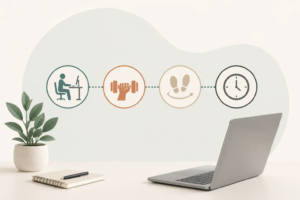
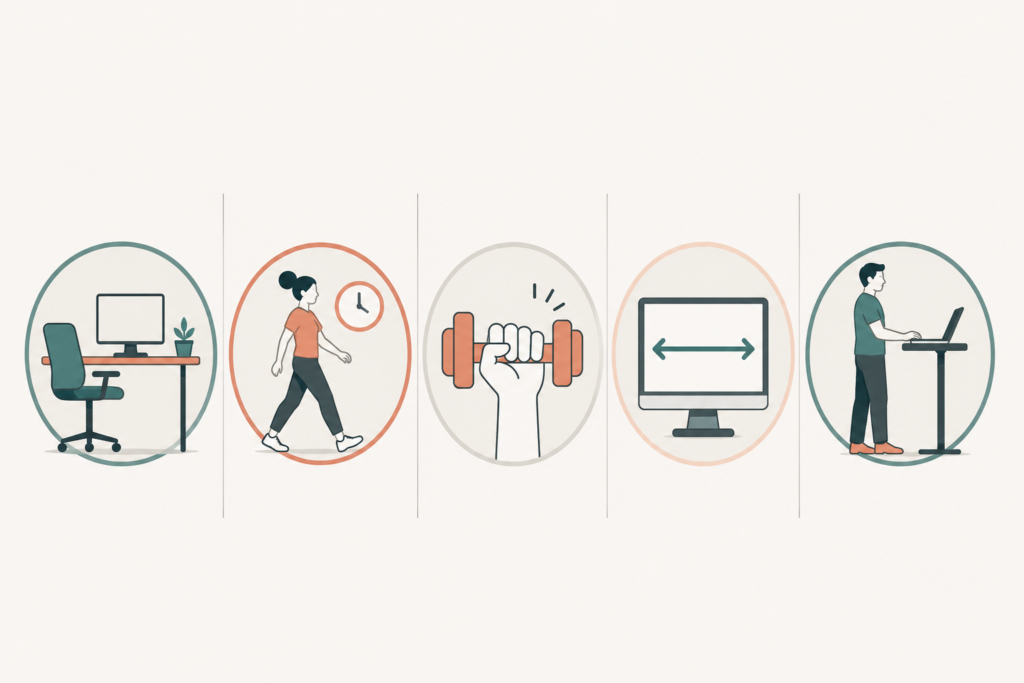
We’ve worked in ergonomics long enough to know that most people don’t need a full intervention. They need two or three specific changes made regularly until those changes stop needing conscious effort. Here are 5 highest-impact habits, regardless of whether someone works at a desk, drives for a living, or does physical work in the field.
1. Reset Your Setup Every Single Morning
This sounds almost insultingly simple. It works.
Most people configure their workstation once and never touch it again. The chair gets adjusted when they first sit down, the monitor gets positioned at some point in the first week, and from that point on the setup is whatever it is. The problem is that setups drift. Someone else uses the chair. The monitor gets nudged. A new keyboard arrives and gets placed wherever there’s room. Over weeks, the carefully arranged workstation becomes something quite different from what it started as.
Spending ninety seconds every morning checking the basics changes this completely. The height of the chair should be such that your feet rest flat and the thighs are almost parallel to the floor. The monitor should be a comfortable viewing distance with the top of the screen at eye level.
None of this is complicated. The habit is the hard part, not the adjustment itself. Once it’s automatic, it takes less time than unlocking a phone.
For people working across multiple environments this summer, a home setup one day and an office the next, this habit matters even more. Hot desks and shared workstations are almost never configured for the person sitting down at them. Taking two minutes to adjust before starting work is not precious. It’s practical.
2. Move Before You Feel Like You Need To
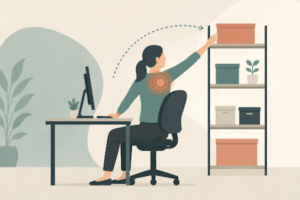
The body doesn’t send an early warning signal. By the time the lower back is stiff or the shoulders are tight, the strain has already been building for a while. Waiting for discomfort to prompt movement means the movement is always arriving late.
Ergonomic principles around spinal loading are clear on this. Brief postural changes every twenty to thirty minutes reduce cumulative disc pressure more effectively than longer breaks taken less frequently. The movement doesn’t need to be significant. Standing for two minutes, walking to refill a water bottle, shifting weight from one side to the other, reaching overhead briefly. Any of these interrupts the static loading pattern that sustained sitting or standing produces.
The practical version of this habit for summer is to attach movement to something that already happens regularly. Every time a message is sent, stand up. Every time a drink is taken, walk somewhere before sitting back down. Tying the habit to an existing behaviour means it doesn’t rely on remembering to do it.
For outdoor workers and field workers, the principle applies differently. The problem usually isn’t too little movement. It’s too little recovery between high-demand movements. Brief rest periods between physically intensive tasks, actually stopping rather than pushing through to the next job, reduce the cumulative load significantly over a full day in the heat.
3. Sort Out Your Grip
Most people use more grip force than their tasks require. It’s one of the most consistent findings across the ergonomic assessments I’ve conducted, and it’s one of the least obvious sources of forearm and wrist strain.
Keys don’t need to be pressed hard. Tools don’t need to be gripped tighter than required for control. Steering wheels don’t need a white-knuckle hold. The excess force loads the forearm flexors continuously, those muscles fatigue, and the downstream result is the kind of forearm tension and wrist discomfort that gets attributed to overuse when it’s actually a force management problem.
The habit to build is simple enough. Periodically check what the hands are doing. Keyboard fingers can be lighter. The tool grip can be relaxed slightly between strokes. The steering wheel can be held without tension. None of these changes compromise the task. They just remove unnecessary load from muscles that are working across an entire shift.
In summer this matters more because heat increases general muscular tension. Workers who are already warm and slightly fatigued tend to grip harder, not lighter. Bringing conscious attention to grip force during the warmer months of the year is worth the effort.
4. Deal With Your Screen Distance
Most people think about monitor height. Far fewer think about how far the screen is from them.
We’ve watched a lot of people gradually edge forwards in their chair because the monitor was sitting just a little too far away. It isn’t a conscious decision. It happens bit by bit until leaning forwards simply feels normal. By the end of the day, they’re blaming their neck or upper back when the problem started with the position of the screen.
A simple test usually tells you everything you need to know. Sit comfortably with your back supported and reach towards the monitor. You should be able to clearly read all items on the monitor without coming away from the backrest. If you can’t, move the monitor closer rather than letting your body bridge the gap.
In summer, with more time spent outdoors on laptops or working from different locations, screen distance is inconsistent by default. Building the habit of checking distance whenever a new setup is used, not just the screen height, addresses one of the more reliable sources of avoidable cervical strain.
5. Check Where Your Weight Is Going When You Stand
Most people think standing is neutral. It isn’t.
Standing in one position for extended periods loads the lumbar spine, fatigues the calf and foot muscles, and creates postural drift that looks a lot like what happens with prolonged sitting. The worker shifts their weight to one hip. The pelvis tilts. The spine compensates. By the end of a shift involving sustained standing, the lower back and the favoured hip have been managing asymmetrical load for hours.
This is particularly relevant in summer for workers who spend time outdoors, on their feet at events, on construction sites, or in retail and hospitality environments where standing is simply the nature of the work.
The goal is avoiding the same posture for too long. If you catch yourself leaning into one hip or resting on one leg, change your position. At a standing workstation, even a small shift every fifteen to twenty minutes gives the muscles supporting your back and legs a chance to share the workload differently.
Anti-fatigue matting helps where the work is fixed to one location. For workers moving between standing and other tasks, footwear matters more than most people realise. A shoe that doesn’t support the arch changes how load travels up through the ankle, knee, and hip across a full shift. Summer is when footwear choices tend to get casual. In physically demanding roles, that casualness has consequences.
Conclusion
None of these habits requires equipment, budget approval, or significant disruption to how work gets done. They require attention and repetition until they stop requiring attention.
Ergonomic training that helps workers build this kind of body awareness, specific to their actual tasks and environments, produces lasting change more reliably than a one-off session or a poster on a wall. For organisations managing teams across Ottawa, Toronto, Gatineau, and surrounding regions, building these habits into the working culture is one of the most cost-effective things available in terms of reducing musculoskeletal injury risk over time.
Injury Prevention Plus works with individuals and organisations across Ottawa, Gatineau, Toronto, and surrounding regions to build exactly this kind of practical ergonomic awareness, through assessments, training, and ongoing support from registered healthcare professionals with over 33 years of experience.
Book an assessment or training session to get started before the summer workload makes it harder to find the time.
Frequently Asked Questions
Why is summer a good time to build ergonomic habits?
Routine changes in summer create a natural opening for new habits. Workers adjusting to heat, different schedules, or new environments are already modifying how they work. Introducing deliberate ergonomic habits during that adjustment period requires less effort than changing an established routine later in the year.
How long does it take for ergonomic habits to become automatic?
Consistent repetition over four to eight weeks generally moves a new physical habit into automatic behaviour. Habits that are tied to existing routines, like checking setup at the start of every workday, tend to become automatic faster than those that rely on remembering to do them independently.
Which ergonomic habit has the biggest impact for desk-based workers?
Moving before discomfort prompts it. Waiting for stiffness or pain to signal the need for movement means the static loading has already been accumulating for too long. Brief postural changes every twenty to thirty minutes reduce cumulative spinal load more effectively than any other single behavioural change available to office workers.
Do these ergonomic habits apply to outdoor and field workers as well as office workers?
Yes, with some adjustment. The specifics change depending on the work environment, but the underlying principles apply across all settings. Grip force management, hydration, movement frequency, and setup habits all reduce physical strain regardless of whether the work happens at a desk, in a vehicle, or in the field.
When do ergonomic habits need to be supported by a formal assessment?
When habits alone aren’t resolving recurring physical complaints, or when multiple workers in the same role are experiencing similar strain patterns. A formal ergonomic assessment identifies the specific conditions and behaviours driving the load and produces targeted recommendations that general habit guidance cannot replace.