Our registered ergonomists are ready to help. Call us at (613) 730-1074 or book a consultation today.
What Is Ergonomics? A Guide to Ergonomic Risk Assessment
Jul 21
When we say our company is an Ergonomics Consulting company, generally the first response we get is either “What is Ergonomics?”, or “Oh, so you adjust desks and chairs right?”. While the latter response is correct, this is not all we do as Ergonomics encompasses more than just office desks and chairs.
What Is Ergonomics?
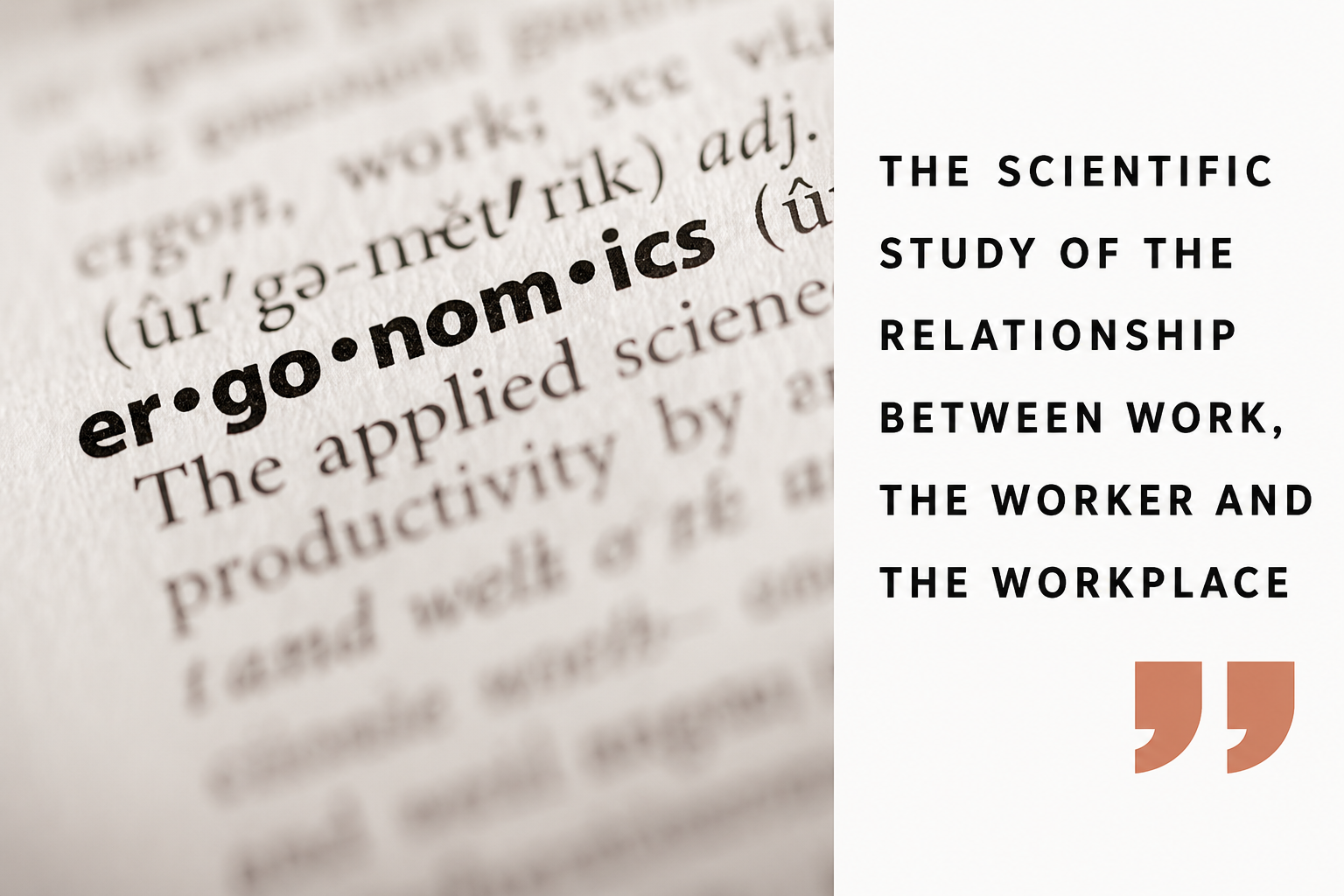
Ergonomics is the scientific study of the relationship between work, the worker, and the workplace. The goal is to design work environments to improve the safety, health, comfort, and performance of the worker while minimizing risks of injury.
Generally, Ergonomics can be defined as ‘The scientific study of the relationship between work, the worker, and the workplace’. The goal is to design the work environments to improve the safety, health, comfort & performance of the worker and minimize risks of injury.
What Does an Ergonomic Assessment Actually Involve?
An ergonomic assessment fits the work or workspace to you not the other way around. It involves analyzing your work, workspace, and how you interact with both, in order to make adjustments that reduce strain and injury risk.
So, what does this mean for you or someone who gets an ergonomic assessment from us?
Well, we will fit the work or workspace to you (the worker), not make you (the worker) fit into the work or workspace. We can do this in a variety of ways, which include analyzing your work, workspace, and you (the worker) to make needed adjustments.
What Are the Primary Risk Factors in an Ergonomic Risk Assessment?
The three primary ergonomic risk factors are Force, Posture, and Repetition. These help identify where the highest risk lies and what needs to be addressed first in any work environment.
We assess the Primary Ergonomic Risk Factors to help us determine where the highest risk is and what needs to be addressed first. These are:
Force – the amount that may need to be lifted/ pushed/ pulled/ carried
Posture – the joint angles of your body while completing different tasks
Repetition – how frequently a task is completed
We conduct an ergonomic risk assessment of these factors in many environments, including office, industrial, and manufacturing to then help us determine adjustments and recommendations needed.
How Does Ergonomics Help Reduce Workplace Injury?
Ergonomics reduces injury risk by first changing the physical environment (Engineering Controls), then adjusting how work is done (Administrative Controls) prioritizing solutions that eliminate the hazard at the source.
Our goal is to reduce the risks of pain and injury to improve comfort and efficiency. To do this, we look first at how we can change the environment (Engineering Controls), then how we may be able to change the work, tools, or tasks (Administrative Controls).
If you are looking for a risk assessment and recommendations for your workspace, contact us today!
Frequently Asked Questions
What is the difference between ergonomics and an ergonomic risk assessment?
Ergonomics is the broader science of fitting work to the worker. An ergonomic risk assessment is a specific process where a trained professional evaluates your workspace and tasks to identify risk factors, such as awkward posture, excessive force, or high repetition, and recommends corrective actions.
Who needs an ergonomic risk assessment?
Any worker who experiences discomfort, pain, or fatigue related to their job tasks may benefit from an assessment. It is also valuable for employers looking to proactively prevent workplace injuries across office, industrial, or manufacturing environments.
What environments do you conduct ergonomic risk assessments in?
Assessments are conducted across a wide range of settings, including office workstations, industrial facilities, and manufacturing environments, anywhere that work-related physical risk factors may be present.
Is an ergonomic assessment only about chairs and desks?
No. While adjusting furniture is part of it, a full ergonomic assessment also looks at task design, tools used, how frequently tasks are performed, and the forces involved, covering far more than just office setup.
What happens after an ergonomic risk assessment?
After the assessment, recommendations are made, starting with Engineering Controls (changes to the environment or equipment) and followed by Administrative Controls (changes to work methods, tasks, or schedules) to effectively reduce identified risks.