Ergonomics for Police, Military and Public Safety
Specialist ergonomic assessments for police officers, military personnel, firefighters, paramedics, and public safety professionals across Ontario and Québec.
Conducted by
Ergonomists
OPS Security
Clearance
Serving
Ontario
Bilingual Services
Available
Public Safety Work Places A Significant Demand on the Body
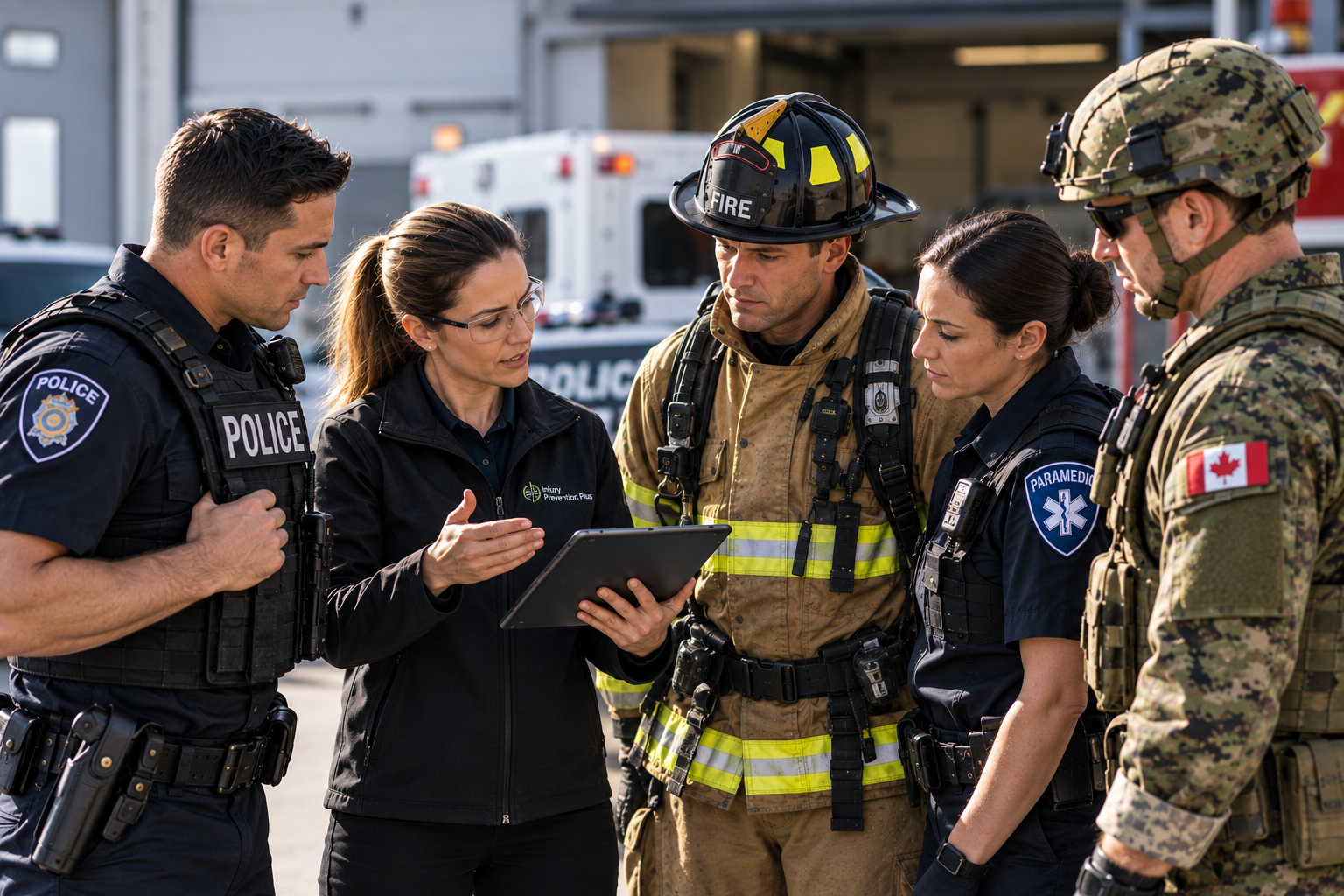
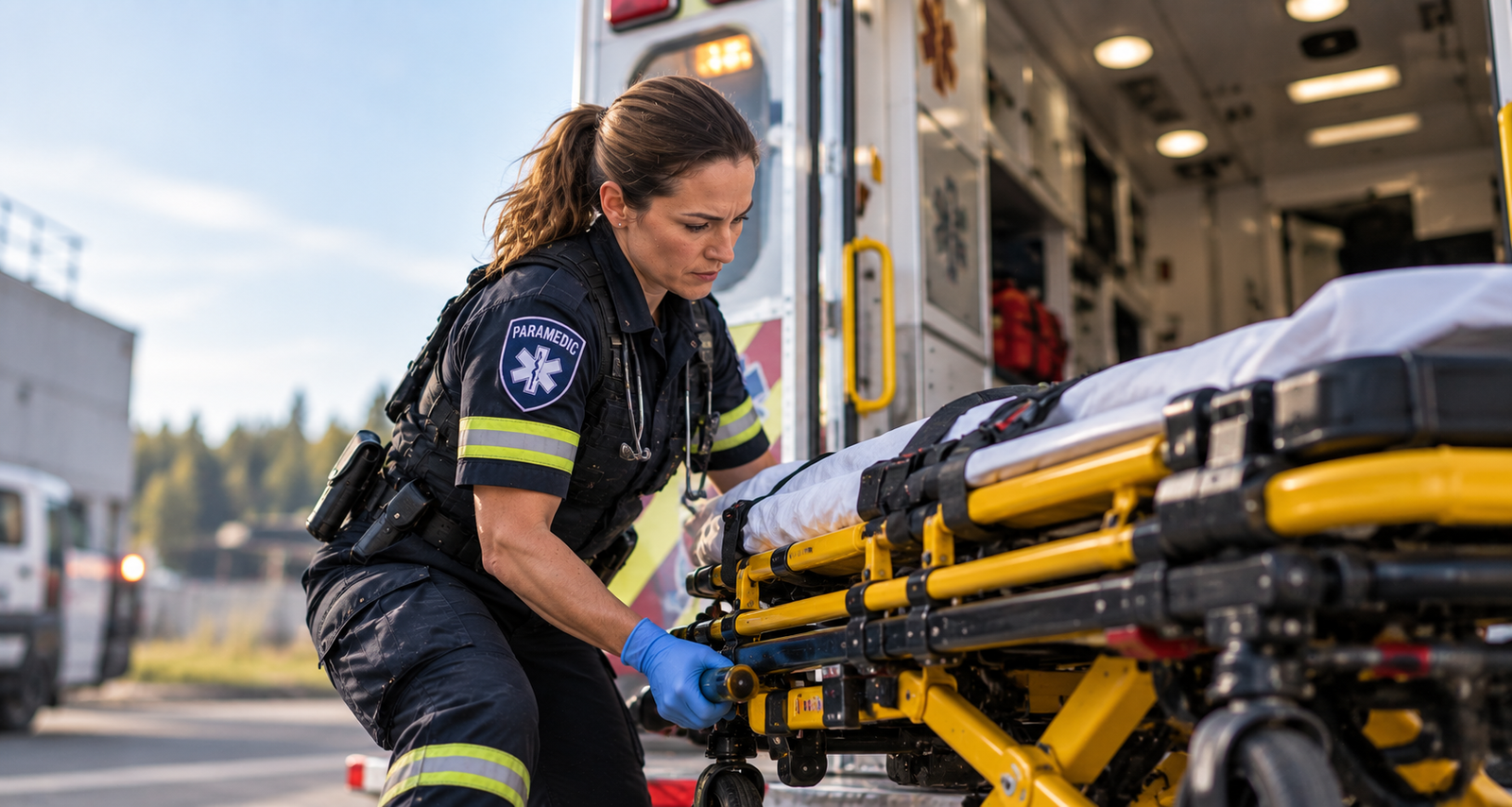
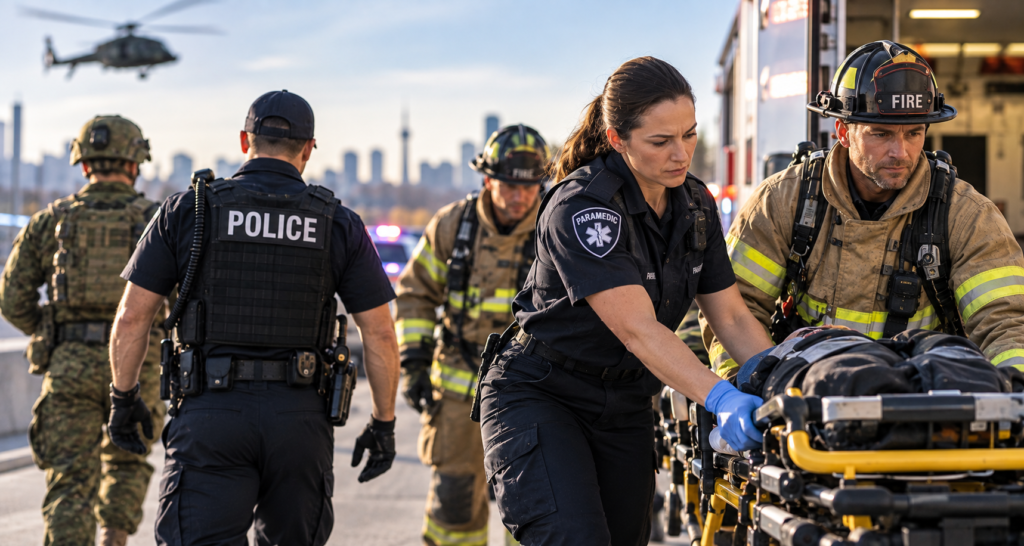
Police officers spend hours in patrol vehicles before responding to physically demanding incidents with no warm-up and no transition time. Firefighters carry heavy protective equipment into environments where the physical demands escalate without warning. Paramedics perform patient lifts and stretcher handling in the back of ambulances, on stairwells, and on the ground at emergency scenes. Military personnel carry substantial loads over extended distances and durations in conditions that vary from a parade ground to an active field deployment.
The physical demands of public safety work are not incidental to the role. They are the role. And unlike most occupational settings, the physical consequences of musculoskeletal injury in public safety extend beyond the worker to the colleagues depending on them and the members of the public relying on their capacity to respond.
Injury Prevention Plus has direct experience delivering ergonomic assessments to public safety organisations. Our assessments are conducted by registered healthcare professionals with OPS security clearance, making us a trusted and qualified provider for police services, military units, fire departments, and emergency services across Ontario.
Why Public Safety Ergonomics Requires Specialist Assessment
While public safety work is firmly rooted in occupational ergonomics, its physical demands are distinct from those of many conventional occupational groups.They are dynamic, unpredictable, and often extreme. The assessment methodology has to reflect that.
Public safety ergonomic assessments at Injury Prevention Plus evaluates:
Load Carriage & Equipment Wear
Equipment load and distribution across duty belts, body armour, backpacks, and load-carrying systems
Fleet & Vehicle Ergonomics
Vehicle ergonomics for patrol cars, ambulances, fire apparatus, and military vehicles including driving posture, prolonged seated exposure, and entry and exit demands
Emergency Patient & Casualty Transport
Patient and casualty handling tasks including stretcher management, casualty carries, and patient transfers in emergency and field environments
Tactical & Operational Demands
Physical demands of operational tasks including lifting, carrying, restraint, pursuit, climbing, and working in confined spaces
Deployment & Shift Postural Strain
Sustained posture and cumulative load during long shifts, night shifts, and extended deployments
Specialized Gear & Tool Mechanics
Tool and equipment ergonomics including firearm handling, rescue equipment, and trade-specific tools for technical rescue and hazmat roles
Operational Readiness & Fatigue Management
Fatigue risk from shift patterns, prolonged driving, and sustained physical readiness demands
Thermal & Environmental Exposure
Impact of extreme temperatures, active weather conditions, heavy turnout gear, and environmental stress on physical strain and cognitive fatigue
What's Included in a Public Safety Ergonomic Assessment
Each assessment is tailored to the specific role, unit, and operational environment being evaluated.
Operational Role Analysis
Review of the specific physical demands associated with the role being assessed, including the full range of tasks from routine patrol or shift work through to high-demand operational incidents.
Equipment Load and Distribution Assessment
Evaluation of duty belt configuration, body armour fit, load-carrying system design, and the cumulative weight and distribution of equipment carried across a shift or deployment.
Vehicle Ergonomic Evaluation
Assessment of driving posture, seat configuration, lumbar support, control reach, prolonged seated exposure, vibration, and entry and exit mechanics for patrol, emergency, and tactical vehicles.
Task-Level Physical Demand Assessment
Evaluation of specific high-demand tasks including patient handling, casualty carries, manual restraint, stretcher management, and equipment deployment using validated ergonomic assessment tools.
Real-Time Coaching and Recommendations
On-the-spot guidance on posture, equipment configuration, task technique, and load management delivered during the assessment session.
Environmental & Dynamic Risk Factors
Analysis of operational surroundings—including extreme temperatures, low-light conditions, uneven terrain, and gear constraints—to mitigate external physical stressors during response operations.
How the Assessment Process Works
Pre-Assessment Intake and Security Clearance Confirmation
We confirm security clearance requirements, gather information about the roles and units being assessed, review existing injury patterns, and coordinate site access in compliance with organisational protocols.
On-Site Operational Observation
A registered ergonomist attends the operational environment to observe workers performing actual duties, including vehicle operation, equipment use, physical tasks, and any simulated or training scenario observations where live operational observation is not feasible.
Real-Time Intervention
Immediate coaching on equipment configuration, posture, and task technique is provided during the session within operational and security constraints.
Risk Quantification
Validated assessment tools are applied to quantify physical demand levels across the specific operational tasks being evaluated, identifying where cumulative load and task demands exceed safe thresholds.
Written Report Delivery
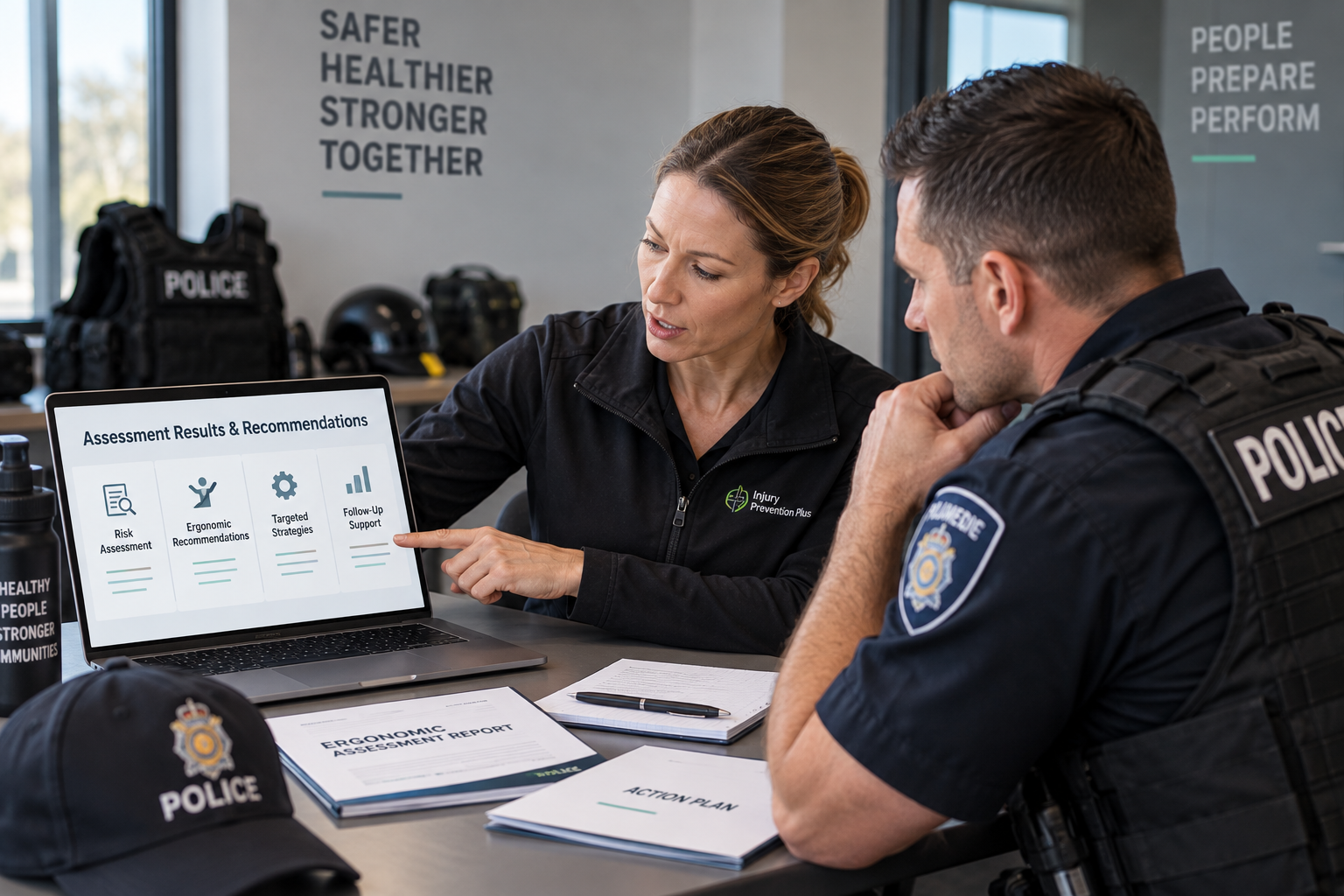
A comprehensive written report documents findings by role and task, with prioritised recommendations for equipment modification, vehicle configuration, task redesign, and operational practice changes where relevant.
What You Receive After Your Assessment
Following your session, you will receive a detailed written report that includes:
Operational Role-Level Findings
Documentation of physical demand levels by specific task and role, including risk ratings from validated assessment tools and identification of the conditions generating the highest cumulative load.
Equipment and Configuration Recommendations
Specific recommendations for duty belt layout, body armour selection and fit, load-carrying system design, and ergonomic equipment selection that reduce physical demand without compromising operational capability.
Vehicle Configuration Recommendations
Specific guidance on seat adjustment, lumbar support positioning, control reach, and vehicle layout changes for patrol, emergency, and tactical vehicles.
Return-to-Work and Accommodation Documentation
Support for WSIB return-to-work planning and modified duty arrangements for public safety personnel, including a Physical Demands Analysis where required under Ontario legislation.
Optional Follow-Up Session
A follow-up to review implementation progress and address any questions arising from the report.
Public Safety Roles We Assess
Law Enforcement
- Police officers, including patrol, tactical, and investigative roles
- Corrections officers
- Public safety dispatchers
- Special constables and enforcement officers
Military and Defence
- Military personnel across operational and support roles
- Tactical team members
- Search and rescue personnel
- Field and deployment roles
Fire and Emergency Services
- Firefighters across structural, industrial, and wildland roles
- Fire apparatus operators
- Technical rescue and hazmat team members
Paramedic and Emergency Medical Services
- Paramedics and EMTs
- Emergency medical dispatchers
- Patient transport personnel
What You Receive After Your Assessment
Equipment Load and Carry
Duty belt weight and distribution, body armour load, backpack and pack systems for military and tactical roles, and the cumulative load carried across a shift or deployment.
Vehicle Operation
Patrol car, ambulance, fire apparatus, and military vehicle ergonomics covering driving posture, prolonged seated exposure, whole-body vibration, and the physical demands of vehicle entry and exit across a shift.
Patient and Casualty Handling
Stretcher management in emergency vehicles and on scene, patient lifts and transfers, casualty carries across varied terrain, and bariatric patient handling for paramedic and emergency medical roles.
Operational Physical Tasks
Manual restraint, pursuit and running demands, climbing and working at height, confined space operations, and the physical demands of emergency scene work across police, fire, and paramedic roles.
Prolonged Standing, Walking, and Patrol
Sustained postural demands across patrol shifts, standing duties, and extended deployment periods, including footwear assessment and surface-related lower limb load.
Physical Demands and Operational Tasks We Evaluate
Reduce musculoskeletal injury rates in operationally demanding roles.
Public safety musculoskeletal injuries are driven by equipment design, vehicle configuration, task demands, and cumulative physical load across shift patterns. Assessment identifies the specific conditions generating that risk and produces targeted interventions appropriate to the operational context.
Support WSIB return-to-work planning for public safety personnel.
A Physical Demands Analysis documents the full physical requirements of a public safety role, providing the objective baseline needed for safe return-to-work planning under Ontario's Workplace Safety and Insurance Act. For police services specifically, this documentation supports the Ottawa Police Service and other Ontario police services in managing return-to-work obligations for officers recovering from musculoskeletal injuries.
Demonstrate OHSA compliance.
Under Ontario's Occupational Health and Safety Act, public safety employers have the same duty to identify and address ergonomic hazards as any other sector employer. Documented assessments provide evidence that this obligation is being actively met.
Leverage OPS procurement authorisation.
Injury Prevention Plus holds OPS security clearance, making us a fully authorised provider for federal and provincial government public safety organisations without the need for individual procurement processes.
Reduce long-term operational capability loss from musculoskeletal injury.
In public safety, musculoskeletal injury doesn't just produce a WSIB claim. It removes an experienced officer, soldier, firefighter, or paramedic from operational duties for weeks or months. The operational cost of that absence compounds the financial one. Proactive ergonomic assessment reduces the frequency of that outcome.
Who Should Book a Public Safety Ergonomic Assessment
- Police service health and safety officers and occupational health teams
- Military unit commanders and defence health and safety representatives
- Fire service health and safety officers and union health and safety committees
- EMS directors and paramedic service administrators
- Return-to-work coordinators managing public safety personnel claims
- Workers experiencing recurring musculoskeletal complaints in public safety roles
- Organisations preparing for OHSA compliance reviews or responding to injury pattern concerns
Ergonomics for police, military and public safety service areas
Ottawa
Serving Ottawa Police Service, federal government public safety organisations, National Defence and Canadian Armed Forces units, and emergency services across the National Capital Region and Eastern Ontario. Injury Prevention Plus has existing working relationships with Ottawa area public safety organisations and familiarity with the specific operational environments and protocols involved.
Toronto
Supporting Toronto Police Service, Toronto Fire Services, Toronto Paramedic Services, and public safety organisations across the Greater Toronto Area including Peel, York, and Durham regions.
Hamilton
Delivering public safety ergonomic assessments to Hamilton Police Service, Hamilton Fire Department, and emergency services throughout the Hamilton region.
Gatineau
Providing public safety ergonomic assessment services to Gatineau Police Service, Sûreté du Québec units, and emergency services across the Outaouais region and Western Québec.
Government Partnerships and Procurement
Injury Prevention Plus holds Ontario Public Service (OPS) security clearance. We are fully authorised to deliver ergonomic assessments to federal and provincial public safety organisations, law enforcement agencies, military units, and government emergency services across Ontario and Québec without the need for individual procurement processes. Our service delivery capability and established familiarity with government security and operational protocols make us a trusted provider for public safety organisations with complex workforce health requirements. Contact us to schedule assessments or request a quote.
Frequently Asked Questions
What is a public safety ergonomic assessment?
A public safety ergonomic assessment is a specialist evaluation of the physical demands placed on police officers, military personnel, firefighters, paramedics, and other public safety professionals during their operational duties. Conducted on-site by an ergonomist with appropriate security clearance, it identifies where equipment design, vehicle configuration, task demands, and cumulative physical load exceed safe thresholds and produces specific recommendations appropriate to the operational context.
How is a public safety ergonomic assessment different from a standard workplace assessment?
Public safety work involves dynamic, unpredictable, and often extreme physical demands that standard office or industrial ergonomic methodology doesn’t adequately address. Public safety assessment evaluates operational task demands, equipment load and distribution, vehicle ergonomics for specialised vehicles, patient and casualty handling, and the cumulative effect of shift patterns and sustained physical readiness on musculoskeletal health. The assessment framework is adapted to the operational reality of the role rather than applied from a generic template.
Does Injury Prevention Plus hold the security clearance required to work with police and military organisations?
Yes. Injury Prevention Plus holds Ontario Public Service security clearance, making us a fully authorised provider for OPS and federal government public safety organisations. We are experienced working within the operational and security protocols of law enforcement and defence organisations across Ontario and Québec.
How does an ergonomic assessment address the specific demands of duty belt and body armour use?
Duty belt and body armour ergonomic assessment evaluates the total equipment load carried, how that load is distributed across the torso, hips, and lower back, and whether the current configuration concentrates load in ways that produce cumulative musculoskeletal strain over a shift. Recommendations address belt layout, armour fit, and load distribution principles that reduce physical demand without compromising operational capability or officer safety.
Can a public safety ergonomic assessment support WSIB return-to-work planning for police officers in Ontario?
Yes. A public safety ergonomic assessment combined with a Physical Demands Analysis of the specific role provides the objective documentation that WSIB return-to-work coordinators and treating practitioners need to determine whether an officer or first responder can safely resume full or modified operational duties following a musculoskeletal injury. This documentation supports return-to-work obligations under Ontario’s Workplace Safety and Insurance Act.
Do you assess vehicle ergonomics for patrol cars and emergency vehicles?
Yes. Vehicle ergonomic assessment for public safety vehicles covers driving posture, seat configuration, lumbar support, control reach, prolonged seated exposure, whole-body vibration, and the physical demands of vehicle entry and exit across a full shift. For police services, assessment also covers the ergonomics of in-vehicle equipment including laptops, radio systems, and the physical demands of transitioning rapidly from a prolonged seated driving posture to active operational tasks.
How do you manage confidentiality and operational security during a public safety ergonomic assessment?
We work within the confidentiality and operational security protocols established by the organisation being assessed. Assessment findings and written reports are handled according to the organisation’s information management requirements. Our OPS security clearance reflect the established trust and compliance standards we operate within when working with government and public safety organisations.
Ready to Book a Public Safety Ergonomic Assessment?
Serving Ottawa, Toronto, Mississauga, Hamilton, Gatineau, and beyond, on-site across Ontario.