Healthcare Ergonomics Assessments
Expert ergonomic assessments for healthcare workers, patient handlers, and long-term care staff across Ontario and Québec.
OPS Security
Clearance
Serving Ontario &
Québec
Provided by Registered Health Professionals
Bilingual Services
Available
Protecting the People Who Protect Others
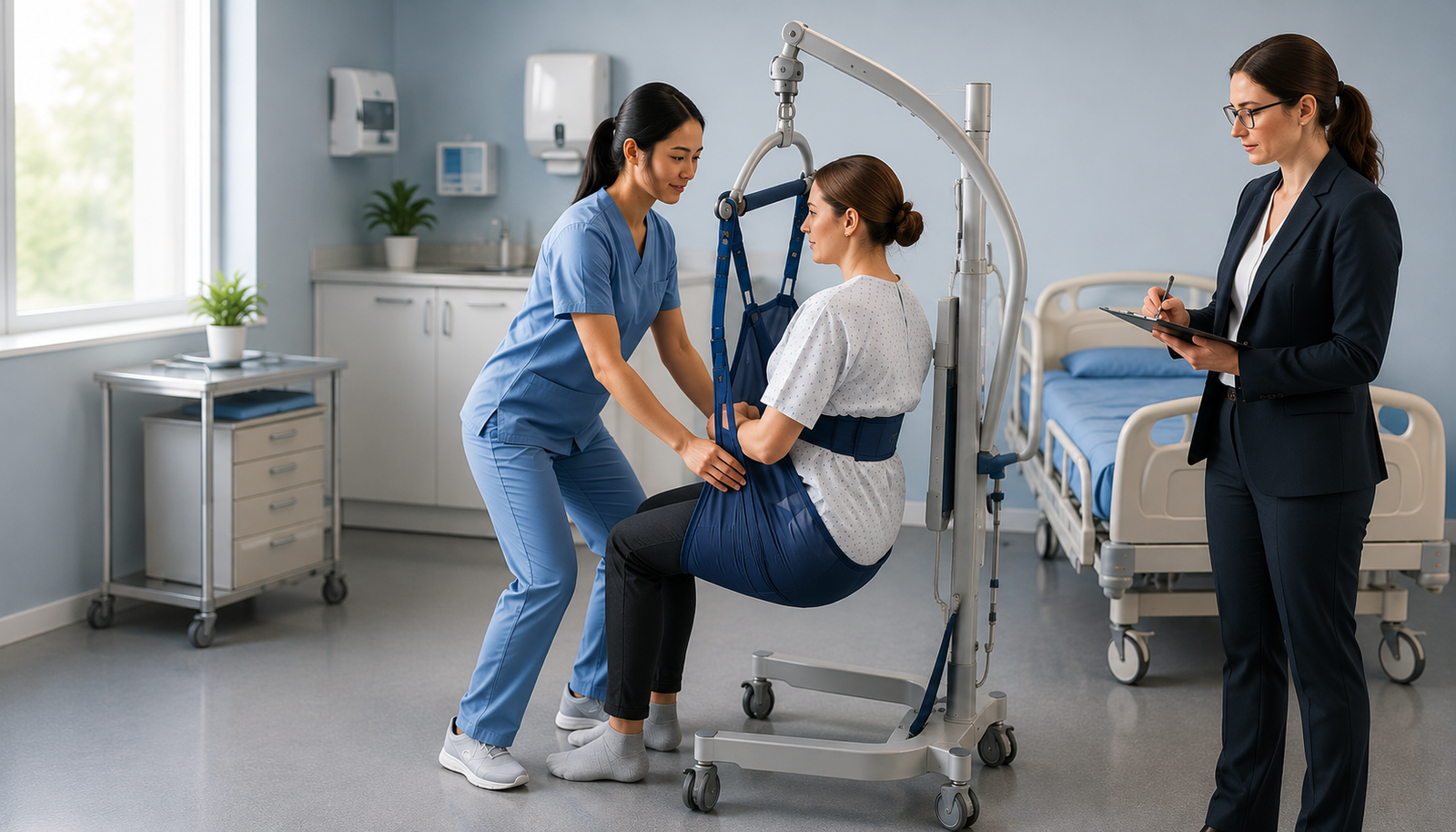
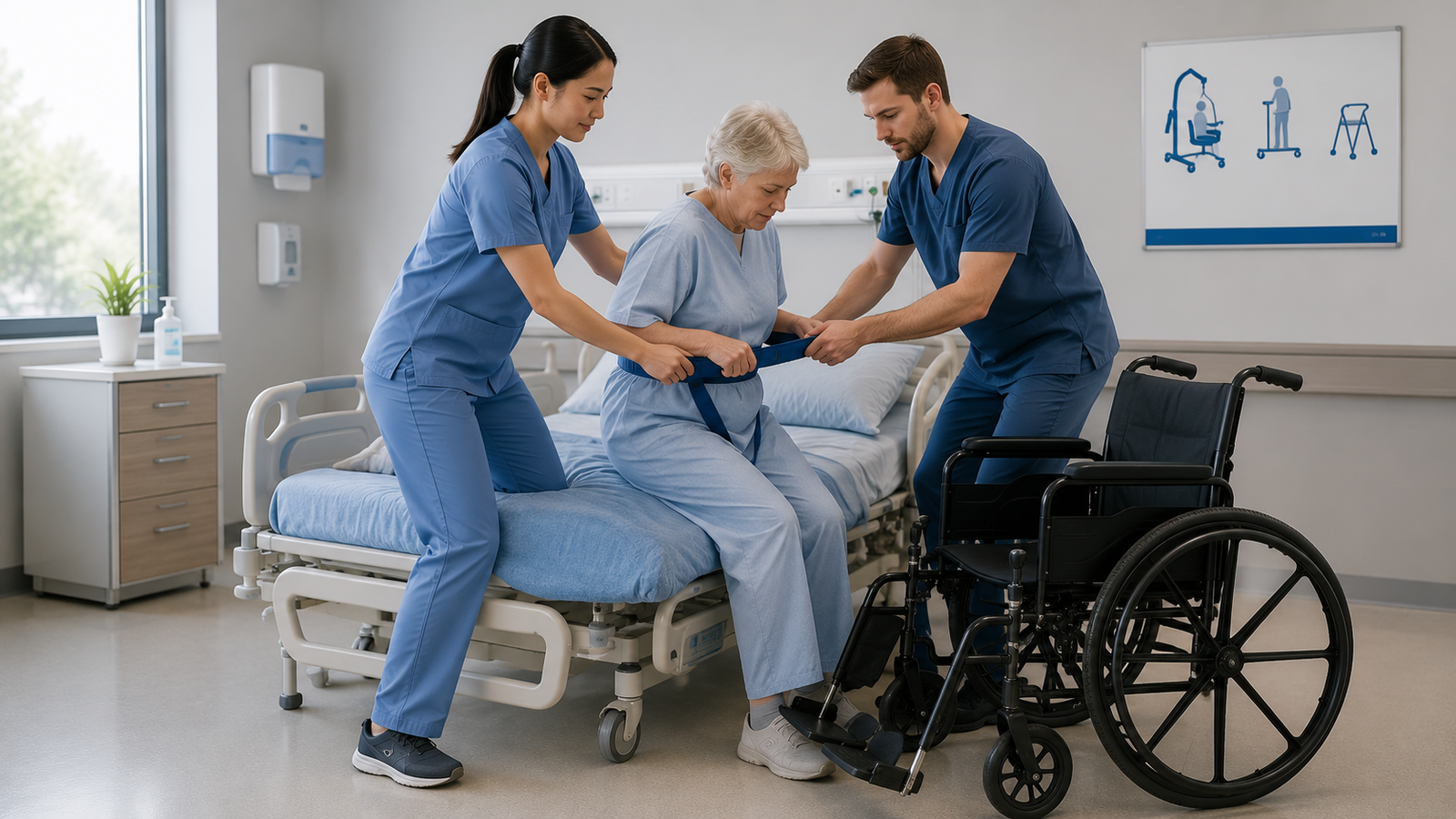
Patient handling puts a lot of physical strain on healthcare workers. Nurses, personal support workers, healthcare aides, physiotherapists, and long-term care staff regularly lift, transfer, and reposition patients. They may be doing this in limited spaces, without the right mechanical equipment nearby, and usually while trying to keep up with a demanding schedule.
The physical demands of healthcare work are not incidental. They are structural. Patient handling tasks generate cumulative musculoskeletal load that builds across every shift. Back injuries, shoulder injuries, and knee injuries in healthcare settings are not accidents. They are the predictable outcome of physical demands that were never formally assessed or managed.
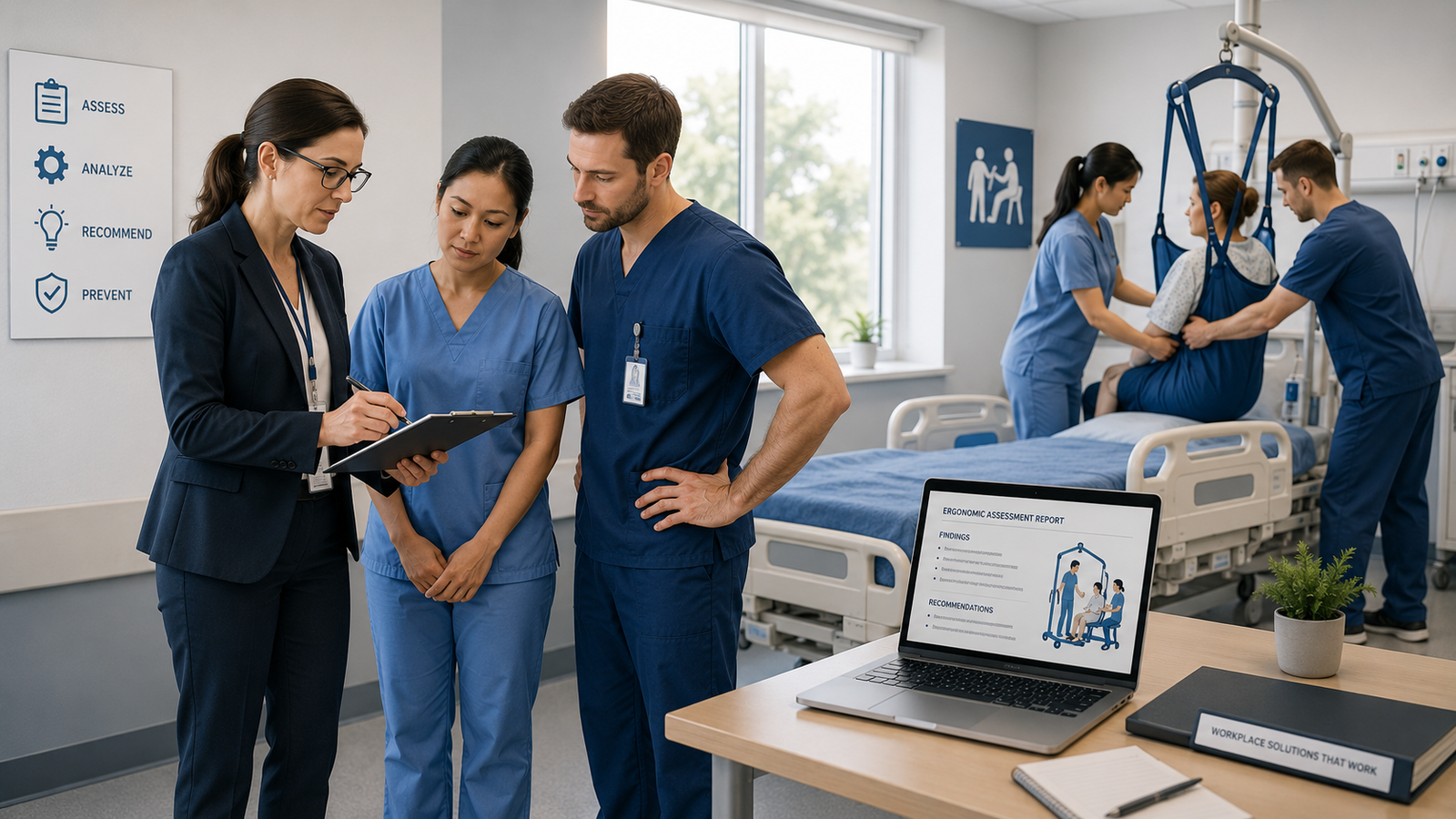
Injury Prevention Plus delivers ergonomic assessments for Healthcare workers that address these demands directly. Our assessments are conducted on-site at your facility by registered healthcare professionals with over 33 years of experience in occupational health ergonomics. We evaluate the specific tasks your team performs, in the actual environments they work in and produce findings and recommendations grounded in what can realistically be changed.
Why Healthcare Ergonomics Requires Specialist Assessment
Standard office ergonomics methodology does not transfer to healthcare settings. The risk factors are different. The environments are different. The physical demands are of a different category entirely.
Ergonomic assessments for Healthcare workers tailors ergonomic methodology specifically to the health care field and focuses on patient handling and care environments. It evaluates:
Lifting & Moving Limits
Patient lifting, transferring, and repositioning tasks against validated safe load thresholds
Bedside Postural Demands
The postures required during bedside care, including sustained forward bending, asymmetrical reaching, and low-level work
Environment & Space Constraints
Manual handling demands in environments not designed for the physical demands being performed in them
Mechanical Equipment Utilization
Mechanical lifting equipment availability, suitability, and whether it is being used consistently
Shift Work-Rest Schedules
Work-rest ratios and recovery time between high-demand tasks across a shift
Cumulative Physical Strain
The cumulative physical load carried by workers across a full working day
Looking at specific tasks and environments makes the right interventions much clearer.
What's Included in an Ergonomic Assessment for Healthcare Workers?
Each assessment is conducted on-site at your facility and tailored to the specific roles and environments being evaluated.
Worker Discomfort and History Review
Discussion of current physical complaints, injury history, and any existing accommodations or modified duty arrangements.
On-Site Facility Evaluation
Direct observation of workers performing actual patient care and handling tasks in their real work environment.
Patient Handling Task Analysis
Evaluation of lifting, transfer, repositioning, and bed mobility tasks against established safe handling thresholds using validated assessment tools.
Posture and Physical Demand Review
Assessment of sustained postures during bedside care, reach demands, low-level work, and pushing and pulling tasks across the shift.
Equipment and Environment Audit
Review of mechanical lifting equipment, assistive devices, and whether the physical layout of care environments supports safe handling practices.
Real-Time Coaching and Recommendations
On-the-spot guidance on patient handling technique, posture, and equipment use delivered during the assessment session.
How the Assessment Process Works
Assessment Intake
We gather information about the roles being assessed, the patient population, the physical demands of the work environment, and any existing injury patterns or accommodation requirements.
On-Site Task Observation
A registered health professional attends your facility to observe workers performing actual patient care tasks, including transfers, lifts, repositioning, and bedside care, in the environments where those tasks occur. While onsite real-time data is collected for risk quantification including items handled, push/ pull forces, heights/ reaches, etc.
Real-Time Intervention
Immediate coaching on technique, equipment use, and task approach is provided during the assessment session where safe to do so.
Risk Quantification
Validated tools and manual handling equations are applied to quantify exposure levels and identify where demands exceed safe thresholds.
Written Report Delivery
A comprehensive report documents findings, risk ratings, specific recommendations, equipment suggestions, and return-to-work or accommodation considerations where applicable.
What You Receive After Your Assessment
Following your session, you will receive a detailed written report that includes:

Clinical Findings Summary
A full documentation of observed risk factors, physical demand levels, and the specific tasks and environments generating the highest load.

Prioritised Recommendations
Evidence-based recommendations organised by urgency and ease of implementation, specific to your facility's actual conditions.
Equipment and Modification Suggestions
Specific suggestions for mechanical lifting equipment, assistive devices, or environmental modifications where relevant.
Optional Follow-Up Session
A 20-minute virtual follow-up to review implementation progress and address any questions arising from the report.
Healthcare Roles We Assess
Clinical and Direct Care
- Registered Nurses and Registered Practical Nurses
- Personal Support Workers (PSWs)
- Healthcare Aides and Attendants
- Physiotherapists and Occupational Therapists
- Home Healthcare Workers
Long-Term Care and Residential Settings
- Long-Term Care Workers
- Retirement Home Staff
- Rehabilitation Facility Workers
Hospital and Acute Care
- Hospital Workers across all care units
- Emergency Department Staff
- Surgical and Procedural Support Staff
Healthcare Environments We Serve

Hospitals and acute care facilities

Long-term care facilities
Retirement homes and assisted living
Home healthcare and community care settings
Rehabilitation facilities

Medical clinics and outpatient settings
Physical Demands Addressed
An ergonomic assessment of Healthcare Workers at Injury Prevention Plus covers the full range of physical demands present in care environments:
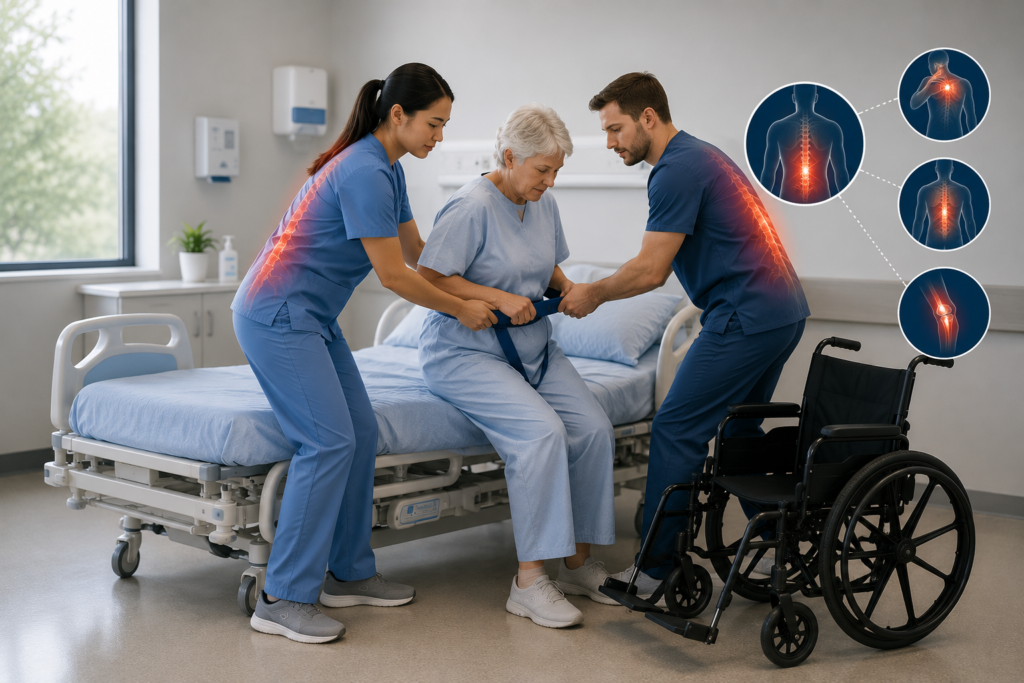

Patient Handling
Safe patient transfers, bed-to-chair transfers, patient lifting, patient repositioning, bariatric patient handling, and bed mobility assistance.
Postural Demands
Sustained forward bending during bedside care, overhead reaching, low-level work, asymmetrical postures during procedures, and prolonged standing.

Manual Handling
Pushing and pulling of beds, equipment carts, and wheelchairs. Carrying of equipment and supplies across facilities.
Repetitive Tasks
High-frequency, low-variation tasks including medication preparation, documentation, and equipment management that generate cumulative upper limb load.
How Ergonomic Assessments of Healthcare Workers Supports Your Organisation
Prevent musculoskeletal injuries before they generate claims.
Patient handling injuries are the leading cause of lost-time claims in healthcare. Assessment identifies the specific tasks and conditions generating that risk before injuries occur.
Support return-to-work and modified duty planning.
A Physical Demands Analysis documents the full physical requirements of a healthcare role, providing the objective baseline that WSIB return-to-work coordinators and treating practitioners need.
Demonstrate OHS compliance.
Under Ontario's Occupational Health and Safety Act, healthcare employers have a duty to identify and address ergonomic hazards. A documented assessment provides evidence that this obligation is being actively met.
Reduce WSIB costs over time.
Organizations that address patient handling ergonomics proactively consistently report reductions in musculoskeletal injury rates, lost-time claims, and modified duty costs.
Improve staff retention.
Healthcare workers who find their physical demands unmanageable leave. Organisations that actively manage ergonomic risk retain experienced staff longer.
Who Should Book a Healthcare Ergonomic Assessment
- Directors of Care and Nursing Managers
- Health and Safety Officers in healthcare settings
- HR and Return-to-Work Coordinators
- Occupational Health teams managing musculoskeletal injury patterns
- Healthcare workers experiencing recurring physical complaints
- Workers returning from patient handling related injuries
- Employers seeking to meet OHS and WSIB safe patient handling obligations
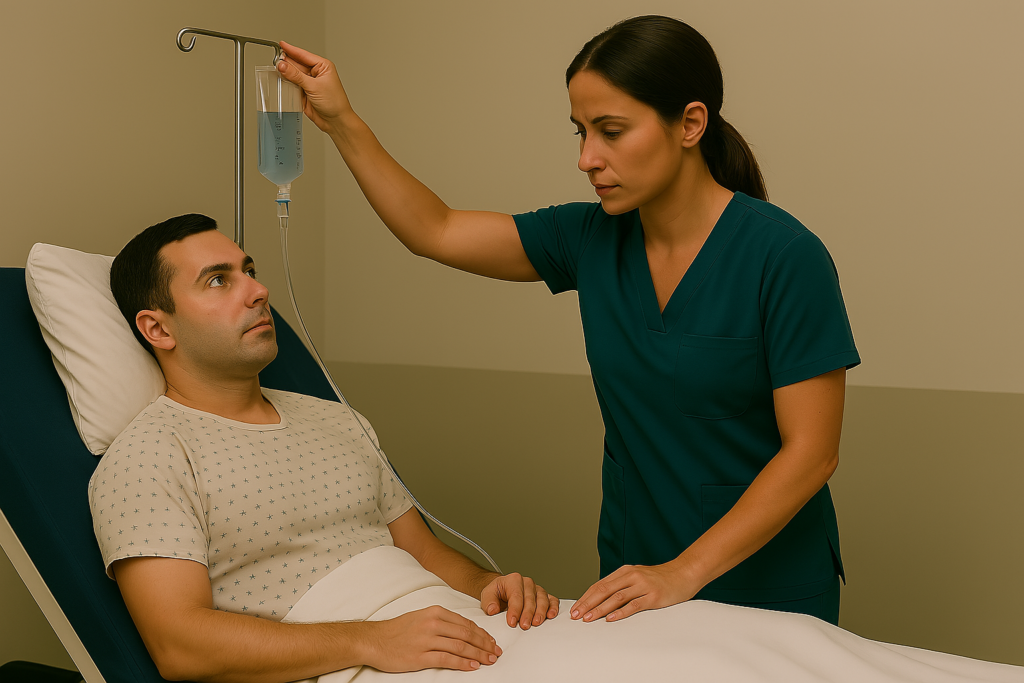
Healthcare ergonomic assessment service areas
Injury Prevention Plus delivers ergonomic assessments for Healthcare Workers across Ontario and Québec. Our registered health professionals travel directly to your facility for on-site evaluations.
Ottawa
Serving hospitals, long-term care facilities, home healthcare organisations, and rehabilitation centres across the capital region and Eastern Ontario.
Toronto
Supporting healthcare employers across the GTA, including acute care hospitals, long-term care homes, and community health organisations throughout Toronto, Mississauga, and Oakville.
Hamilton
Delivering expert healthcare ergonomics services to hospitals, rehabilitation facilities, and long-term care operators throughout the Hamilton region.
Gatineau
Providing fully bilingual healthcare ergonomic assessment services to francophone care workers and healthcare organisations across the Outaouais region and Western Québec.
Frequently Asked Questions
What is an ergonomic assessment for Healthcare workers?
An ergonomic assessment for healthcare workers is an on-site evaluation of the physical demands placed on healthcare workers during patient care tasks, including lifting, transfers, repositioning, and bedside care. Conducted by a registered ergonomist, it identifies where those demands exceed safe thresholds and produces specific, actionable recommendations to reduce injury risk.
Which healthcare roles benefit most from ergonomic assessment?
Any role involving patient handling carries significant ergonomic risk. Nurses, PSWs, healthcare aides, and home healthcare workers who perform regular patient transfers and repositioning tasks are among the highest-risk groups. Long-term care workers and hospital staff in physically demanding care units also benefit significantly from formal assessment.
How does ergonomic assessment for healthcare workers different from a standard industrial assessment?
Ergonomic assessments for healthcare workers uses patient handling-specific assessment methodology rather than general industrial tools. It evaluates patient lift and transfer tasks against patient handling thresholds, assesses the physical layout of care environments, and reviews mechanical lifting equipment availability and use. The physical demands in healthcare settings require this level of specificity to produce findings that are accurate and actionable.
Can an ergonomic assessment for healthcare workers support WSIB return-to-work planning in Ontario?
Yes. An ergonomic assessment for healthcare workers, combined with a Physical Demands Analysis of the specific role, provides the documented baseline that WSIB return-to-work coordinators and treating healthcare providers need to determine whether a worker can safely resume full or modified duties. This documentation reduces friction in the return-to-work process and supports appropriate accommodation planning.
Do you assess home healthcare and community care workers?
Yes. Home healthcare workers face unique ergonomic challenges because they perform patient handling tasks in environments not designed for those demands. Our assessments for home healthcare workers evaluate the specific tasks performed, the physical constraints of client home environments, and the carrying and travel demands associated with community care roles.
How does ergonomic assessment help with patient handling injury prevention?
Patient handling injuries develop from cumulative exposure to high-demand lifting, transfer, and repositioning tasks rather than from single incidents. A formal ergonomic assessment quantifies that cumulative exposure, identifies which specific tasks exceed safe thresholds, and produces targeted interventions, equipment recommendations, and technique modifications that reduce injury risk at the source.
Do you offer bilingual healthcare ergonomic assessment services?
Yes. Injury Prevention Plus provides fully bilingual ergonomic assessments for healthcare workers in English and French, with particular capacity serving francophone healthcare workers and organisations in Gatineau, the Outaouais region, and across Eastern Ontario.
How do you address bariatric patient handling in your assessments?
Bariatric patient handling generates significantly higher physical demand than standard patient handling tasks and requires specific equipment and technique considerations. Our assessments address bariatric handling directly, reviewing the equipment available, the postures required, and whether current practices fall within safe limits for the workers performing them.
Ready to Book an Ergonomic Assessment for Healthcare Workers?
Serving Ottawa, Toronto, Mississauga, Oakville, Hamilton, Gatineau, and beyond, both in-person across Ontario and Québec.