- Home
- About
- Services
- Office Ergonomic Assessment
- Virtual Ergonomic Assessment
- Webinars, Seminars and Training
- Physical Demands Analysis
- Vehicle Assessments
- Individual industrial Assessments
- Return to work-assessments
- Ergonomic risk assessments
- Corporate Opportunities
- Functional capacity evaluations
- Healthcare Ergonomics Assessments
- Manufacturing Ergonomic Assessment
- Warehouse Ergonomic Assessment
- Construction Ergonomic Assessment
- Ergonomics for Police, Military and Public Safety
- Blog
- Contact
- FAQs

Warehouse and Logistics Ergonomic Assessment
On-site ergonomic assessments for warehouse workers, order pickers, material handlers, and logistics teams across Ontario and Québec.
NMSO Listed
Provider
OPS Security
Clearance
Serving Ontario &
Québec
Conducted by
Ergonomists
Bilingual Services
Available

Where Musculoskeletal Injury Rates Are Among the Highest in Any Sector
Warehouse and logistics environments generate some of the most significant musculoskeletal injury rates in Canadian workplaces. Order pickers, material handlers, packers, forklift operators, and shipping and receiving workers perform physical tasks at high frequency across full shifts, often in environments where ergonomic controls are absent and task design has never been formally reviewed.
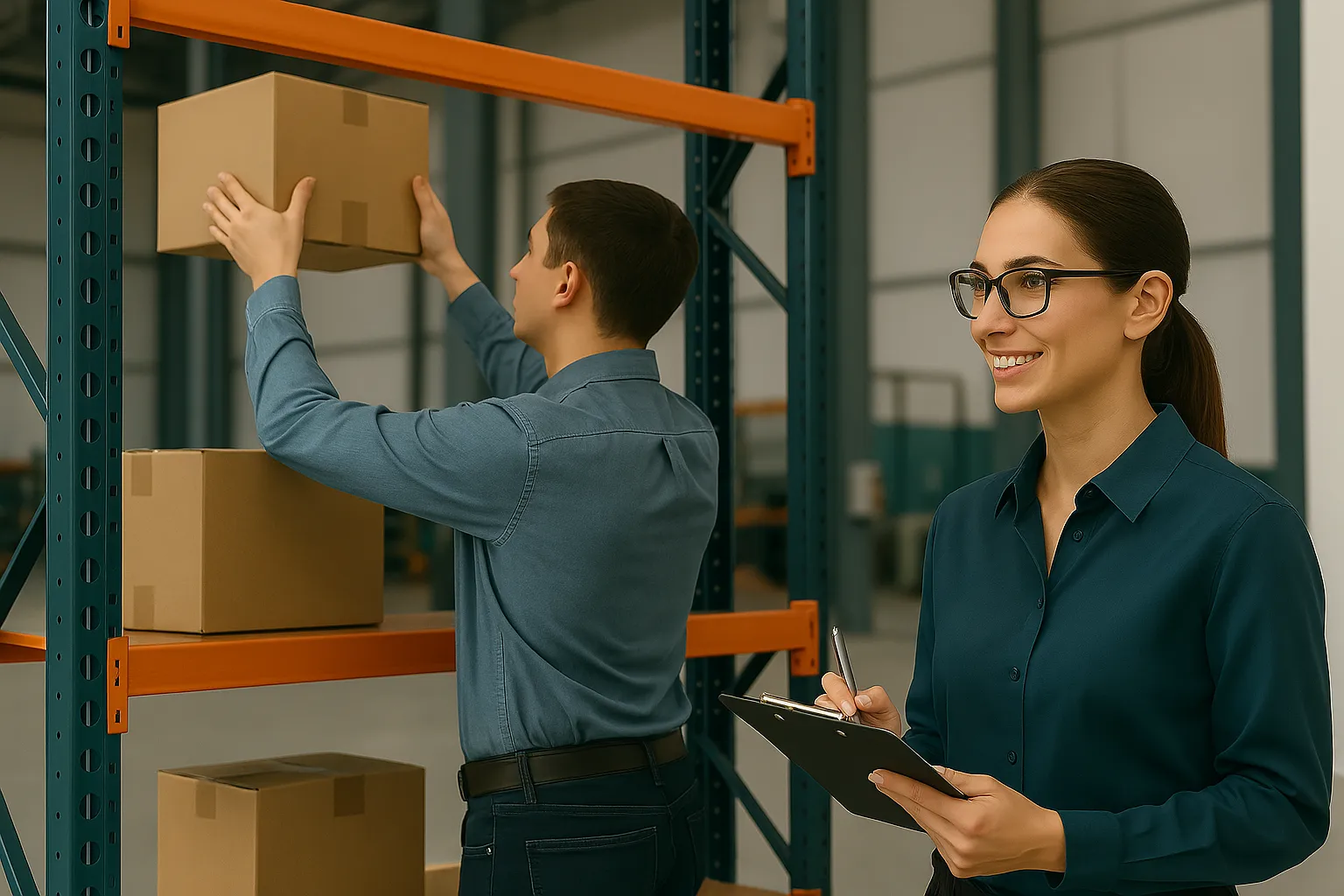
Lifting at floor level and above shoulder height. Reaching into racking across full arm extension. Carrying loads over uneven warehouse floors. Pushing and pulling pallet jacks and carts across long distances. These demands are not incidental to the work. They are the work. And without formal ergonomic assessment, they accumulate into injury patterns that become predictable features of warehouse operations rather than preventable outcomes.
Injury Prevention Plus delivers warehouse ergonomic assessments on-site at your distribution centre, fulfillment facility, or logistics hub. Our ergonomists evaluate the physical demands of your team’s actual tasks, in your actual environment, and produce findings and recommendations that can be implemented on a working warehouse floor.
Why Warehouse Ergonomics Requires Task-Level Assessment
The physical risk in warehouse environments isn’t primarily about individual worker behaviour. It’s about how tasks are designed and how the physical environment structures the demands workers are exposed to across every shift.
A pick face positioned at floor level for a high-frequency item. Racking stocked to the back of the bay requiring full arm extension on every retrieval. Packing stations at heights that produce sustained forward bending. Outbound staging areas where workers lift and carry without mechanical assist because the equipment isn’t accessible or practical in the workflow.
These are design decisions. They drive injury patterns regardless of how well individual workers have been trained. Warehouse ergonomic assessment at Injury Prevention Plus identifies these conditions at the task and environment level and produces recommendations that address the source of the risk rather than the individual worker managing it.
Assessment evaluates:
Lifting task demands
including load weight, lift height, frequency, and spinal loading
Reach distances
and shoulder load during picking, packing, and storage tasks
Push and pull force
demands for carts, pallet jacks, and wheeled equipment
Carrying demands
including load weight, distance, and surface conditions
Forklift operator
posture, vibration exposure, and entry and exit mechanics
Packing station
configuration and the postural demands of sustained packing work
Work-rest ratios
and whether task rotation effectively distributes physical load
Workflow & Spatial Design
Aisle clearance, congestion points, and accessibility of mechanical lifting aids during peak operations
What's Included in a Warehouse Ergonomic Assessment
Each assessment is conducted on-site during active warehouse operations and tailored to the specific roles, tasks, and environments being evaluated.
On-Site Warehouse Observation
Direct observation of workers performing actual warehouse tasks including picking, packing, receiving, loading, and material handling at real operating conditions.
Task-Level Physical Demand Analysis
Quantification of lifting, carrying, pushing, pulling, and reaching demands using validated ergonomic assessment tools applied to the specific tasks and task parameters present in your facility.
Storage and Pick Face Layout Review
Evaluation of racking configuration, pick face heights, storage positioning, and whether the physical layout creates avoidable reach and lift demands for high-frequency tasks.
Equipment and Material Handling Review
Assessment of pallet jacks, carts, conveyors, mechanical assists, and other material handling equipment for ergonomic suitability and whether available equipment is being used consistently.
Forklift and Vehicle Assessment
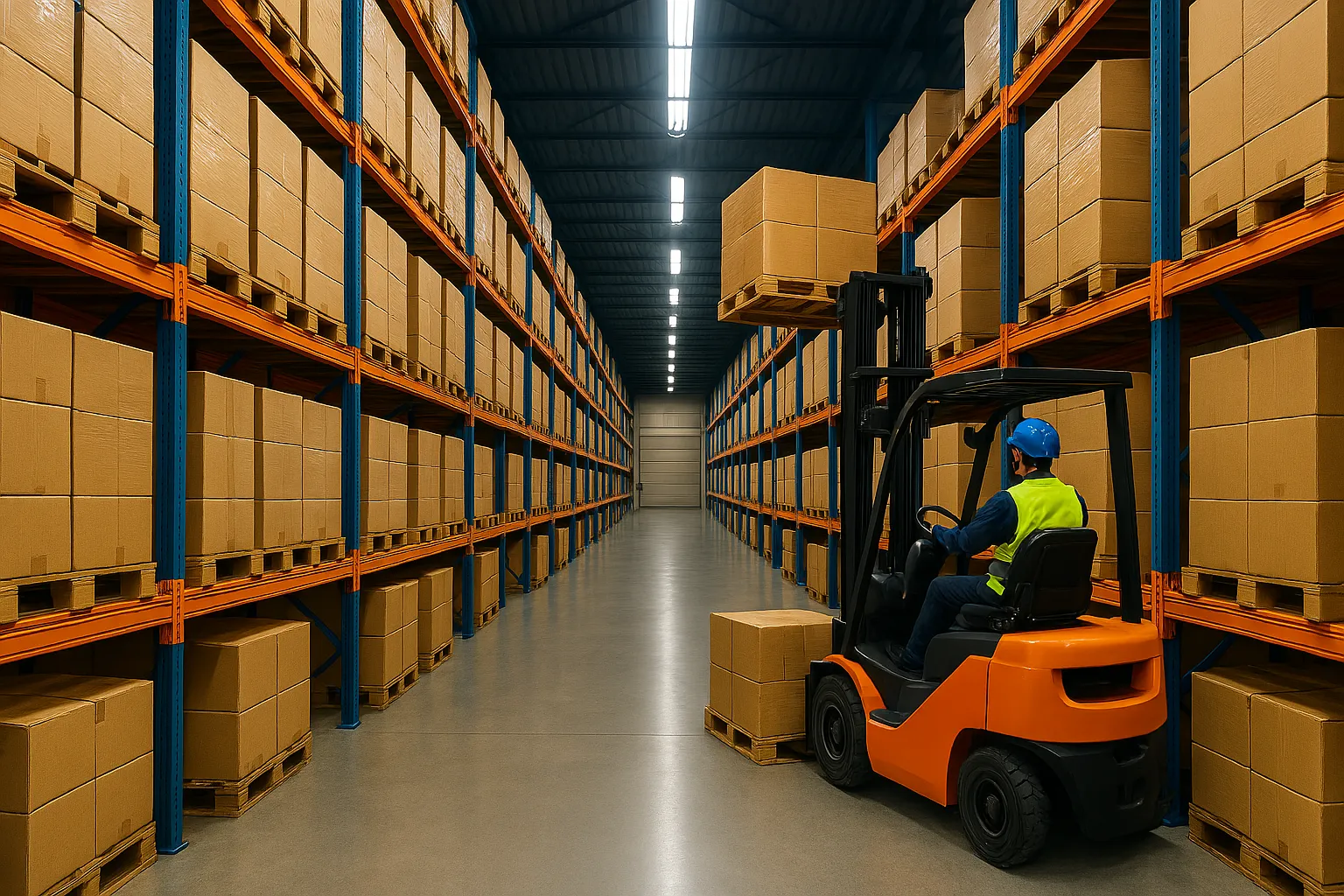
Evaluation of forklift operator posture, seat configuration, vibration exposure, and entry and exit mechanics for workers spending significant portions of their shift in vehicle operation.
Real-Time Coaching
On-the-spot guidance on lifting technique, task approach, and equipment use delivered during the assessment session.
How the Assessment Process Works
On-Site Observation During Active Operations
An ergonomist gathers information about the role being assessed, the tasks and physical demands involved, any existing injury patterns, and current accommodation or modified duty arrangements. They attend your facility during active operations to observe workers performing their actual tasks under real working conditions, including task pace, load variability, and environmental factors. Real-time data is collected while onsite for risk quantification.
Real-Time Intervention
Immediate coaching and technique guidance is provided during the session where operationally feasible.
Risk Quantification
Validated tools including RULA, REBA, NIOSH, Dempsey, Revised Hand Strain, Snook tables, Work(s), HandPak, Liberty Mutual equations, and the LiFFT method for cumulative spinal loading are applied to quantify physical demand levels and identify which tasks and areas of the facility generate the highest risk.
Written Report Delivery
A comprehensive report documents findings by task and area, with prioritised recommendations for task redesign, layout changes, equipment additions, and work-rest structure modifications.
What You Receive After Your Assessment
Task and Area-Level Findings
Documentation of physical demand levels by specific task and facility area, including risk ratings from validated assessment tools and identification of the highest-priority intervention points.

Layout and Storage Modification Proposals
Specific proposals for pick face repositioning, racking configuration changes, packing station height adjustments, and staging area redesign where these would reduce physical demand for high-frequency tasks.

Task Rotation and Job Design Guidance
Recommendations for task rotation schedules that effectively distribute cumulative physical load across the team rather than concentrating it in specific roles or individuals.

Return-to-Work and Accommodation Documentation
Support for WSIB return-to-work planning and modified duty arrangements, including Physical Demands Analysis where required under Ontario legislation.
Warehouse and Logistics Environments We Serve

Distribution centres

E-commerce fulfillment centres
Third-party logistics (3PL) warehouses

Manufacturing-attached warehouses

Rehabilitation facilities

Food distribution and cold chain operations
Warehouse and Logistics Roles We Assess
- Order pickers
- Material handlers
- Packers and pick and pack workers
- Forklift operators
- Shipping and receiving workers
- Loaders and unloaders
- Warehouse supervisors with physical task involvement

How Warehouse Ergonomic Assessment Supports Your Organisation

Address the root cause of musculoskeletal injury patterns.
Back injuries, shoulder injuries, and repetitive strain injuries in warehouse operations are driven by task design and facility layout. Assessment identifies what specifically is generating those injury patterns and what changes would reduce them.
Support WSIB return-to-work and modified duty planning.
A Physical Demands Analysis documents the full physical requirements of specific warehouse roles, providing the objective baseline needed for safe return-to-work planning under Ontario's Workplace Safety and Insurance Act.

Demonstrate OHS compliance.
Under Ontario's Occupational Health and Safety Act, employers have a duty to identify and address ergonomic hazards in the workplace. Documented warehouse ergonomic assessments provide evidence that this obligation is being actively met.
Reduce WSIB and workers' compensation costs.
Warehousing and logistics organizations that address manual handling and repetitive task ergonomics proactively consistently report reductions in injury rates, lost-time claims, and modified duty costs over time.
Improve operational throughput.
The task redesign and layout changes that reduce injury risk frequently improve picking and packing efficiency and reduce the output degradation that fatigue produces across a full warehouse shift.
Who Should Book a Warehouse Ergonomic Assessment
- Warehouse managers and operations directors
- Health and safety officers and joint health and safety committees
- HR and return-to-work coordinators
- Disability management specialists
- Workers experiencing recurring back, shoulder, or upper limb complaints in warehouse roles
- Workers returning from manual handling or repetitive strain injuries
- Employers managing high volumes of WSIB claims in warehouse and logistics roles
Warehouse ergonomic assessment service areas
Ottawa
Serving distribution centres, logistics hubs, and warehousing operations across the National Capital Region and Eastern Ontario.
Toronto
Supporting e-commerce fulfillment centres, third-party logistics operations, retail distribution, and manufacturing-attached warehouses across the GTA, including Mississauga, Oakville, and Hamilton.
Hamilton
Delivering warehouse ergonomics services to distribution and logistics operations throughout the Hamilton region.
Gatineau
Providing fully bilingual warehouse ergonomic assessment services to distribution and logistics employers across the Outaouais region and Western Québec.
Frequently Asked Questions
What is a warehouse ergonomic assessment?
A warehouse ergonomic assessment is an on-site evaluation of the physical demands placed on warehouse workers during their actual tasks, including picking, packing, lifting, carrying, and material handling. Conducted by an ergonomist during active operations, it identifies where task demands exceed safe thresholds and produces specific recommendations to reduce injury risk at the task and facility level.
Which warehouse injuries does ergonomic assessment help prevent?
Warehouse ergonomic assessment addresses the conditions driving back injuries, shoulder injuries, hand and wrist injuries, knee injuries, and repetitive strain injuries in warehouse and logistics settings. These injuries are primarily driven by lift heights, reach distances, load weights, task frequency, and work-rest structure, all of which a formal assessment evaluates directly.
How does a warehouse ergonomic assessment evaluate manual material handling?
Manual handling demands are quantified using RULA, REBA, NIOSH, Dempsey, Revised Hand Strain, Snook tables, Work(s), HandPak, Liberty Mutual equations, and the LiFFT method for cumulative spinal loading. These tools measure the specific parameters of each handling task, including load weight, height, frequency, and distance, and compare them against established safe limits to identify where demand exceeds what workers can sustain without injury risk.
Can a warehouse ergonomic assessment support WSIB return-to-work planning in Ontario?
Yes. Assessment findings, combined with a Physical Demands Analysis of the specific warehouse role, provide the objective documentation that WSIB return-to-work coordinators and treating practitioners need to determine whether a worker can safely resume full or modified duties following a manual handling or repetitive strain injury.
Do you assess forklift operators as part of a warehouse ergonomic assessment?
Yes. Forklift operator ergonomics involves sustained seated posture, whole-body vibration, and repeated entry and exit demands that require specialist assessment methodology. Our warehouse assessments include forklift operator evaluation covering seat configuration, vibration exposure, postural demands during operation, and entry and exit mechanics.
How do you assess push and pull tasks in warehouse environments?
Push and pull force demands are evaluated using validated push-pull assessment methodology that accounts for the force required to initiate and sustain movement, the height at which force is applied, the distance involved, and the frequency across a shift. Recommendations address handle height, floor surface, equipment maintenance, and load limits.
Push and pull force demands are evaluated using validated push-pull assessment methodology that accounts for the force required to initiate and sustain movement, the height at which force is applied, the distance involved, and the frequency across a shift. Recommendations address handle height, floor surface, equipment maintenance, and load limits.
How long does a warehouse ergonomic assessment take?
Duration depends on the size of the facility, the number of roles being assessed, and the range of tasks to be evaluated. A focused assessment of two to three high-priority roles typically takes three to four hours on-site. Full facility assessments covering multiple roles and areas are scoped individually. We can also coordinate multi-site assessments for organisations managing ergonomics across multiple warehouse locations.
Serving Ottawa, Toronto, Mississauga, Oakville, Hamilton, Gatineau, and beyond, on-site across Ontario and Québec.
Serving Ottawa, Toronto, Mississauga, Oakville, Hamilton, Gatineau, and beyond, on-site across Ontario and Québec.