Manufacturing Ergonomic Assessment
Expert ergonomic assessments for healthcare workers, patient handlers, and long-term care staff across Ontario and Québec.
OPS Security
Clearance
Serving Ontario &
Québec
Provided by Registered Health Professionals
Bilingual Services
Available

Reducing Injury Risk Where the Physical Demand Is Highest
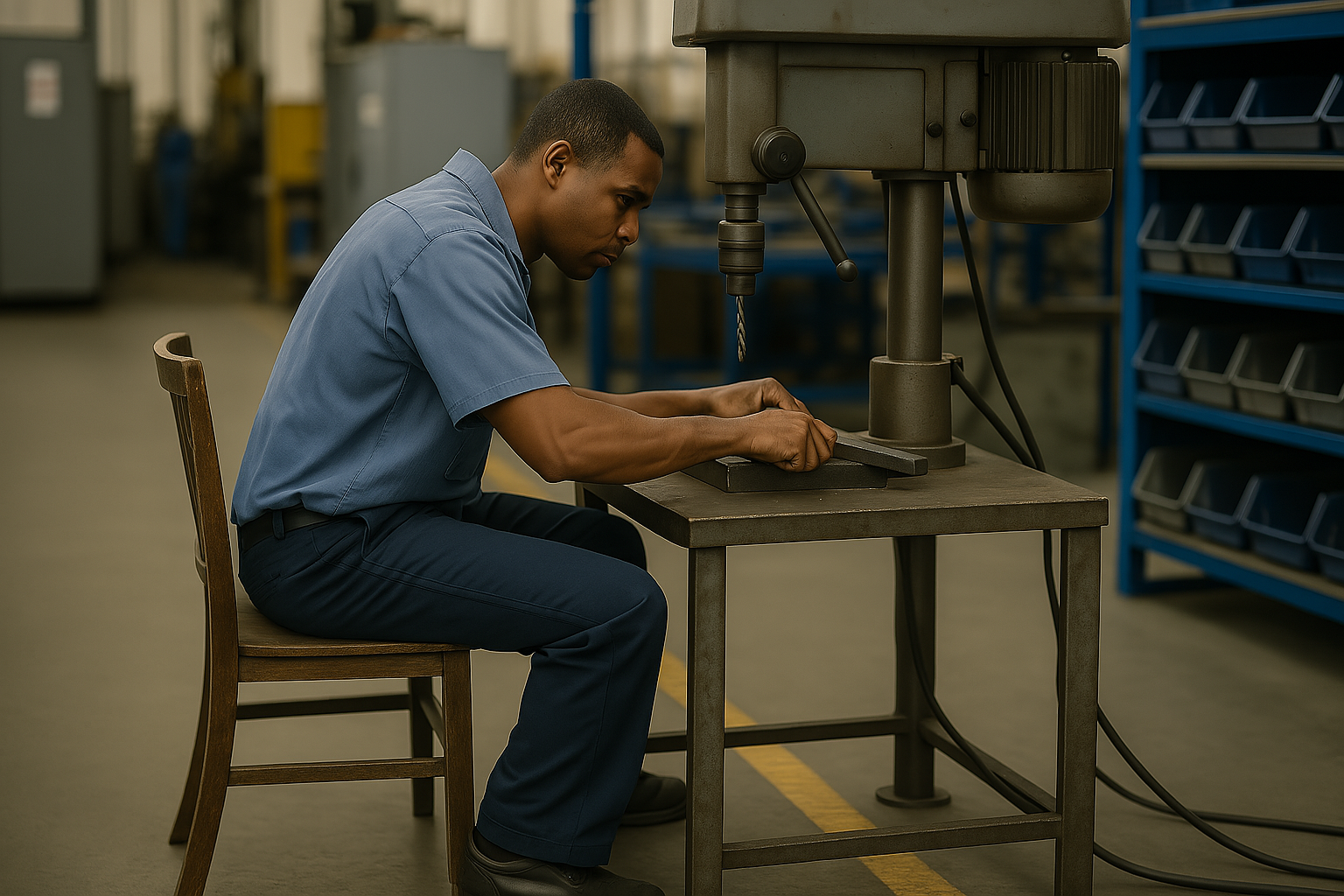
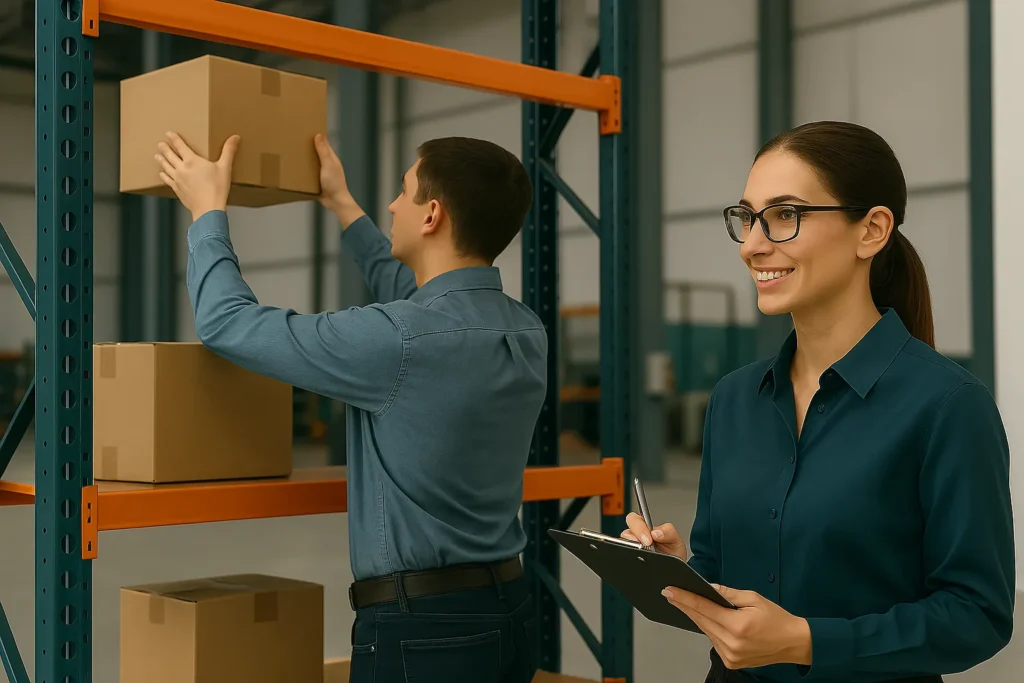
Manufacturing work can be repetitive and physically demanding. Workers may perform the same lifting, reaching, pushing, pulling, or handling tasks throughout every shift. The strain often builds slowly, sometimes over months, before it becomes an obvious injury.
Repetitive motion injuries, manual handling injuries, and cumulative musculoskeletal disorders are among the most common and most costly outcomes in manufacturing settings across Ontario. They are also among the most preventable, when the physical demands driving them are identified early and addressed through structured ergonomic intervention.
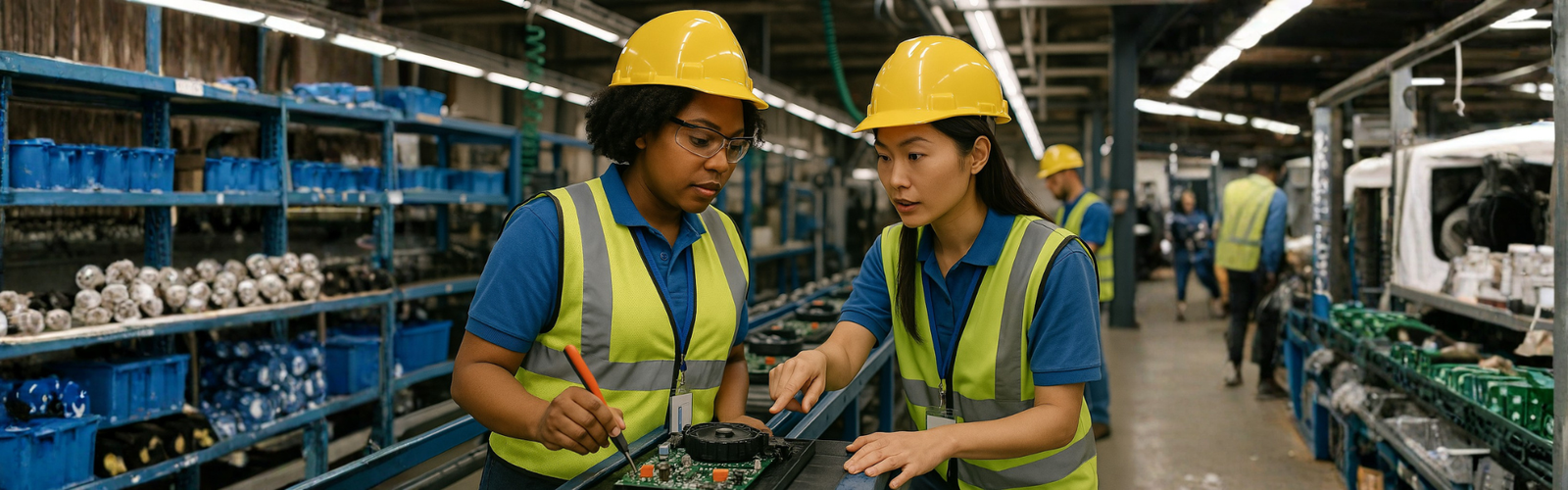
Injury Prevention Plus delivers manufacturing ergonomic assessments on-site at your production facility. Our registered health care professionals don’t just look at the equipment on paper. They look at how your workers actually use it, the tasks they perform, and how the production floor is laid out. From there, they recommend practical changes that can realistically work in a busy production environment.
Why Manufacturing Ergonomics Requires On-Site Assessment
Manufacturing physical demands cannot be adequately evaluated from a desk. The task is the unit of analysis, not the workstation. An assessor who observes an assembly worker performing their actual role, at their actual line speed, with their actual tools, in their actual environment, sees a fundamentally different picture from one working from a job description.
Manufacturing ergonomic assessment at Injury Prevention Plus evaluates:
Repetitive motion tasks
and the cumulative upper limb and spinal load they generate across a shift
Manual material handling
including: lifting, carrying, pushing, and pulling
Overhead work and extended
reach demands that load the shoulder joint beyond sustainable thresholds
Hand tool use
grip type, grip force, sound and vibration exposure
Workstation height
reach distances, and postural demands at fixed production stations
Machine loading
and unloading tasks and the force and posture demands they generate
What's Included in a Manufacturing Ergonomic Assessment
Each assessment is conducted on-site at your production facility and tailored to the specific roles, tasks, and equipment being evaluated.
On-Site Production Floor Observation
Direct observation of workers performing actual production tasks at real line speeds in the actual work environment.
Task-Level Physical Demand Analysis
Evaluation of specific production tasks against validated ergonomic thresholds using RULA, REBA, NIOSH, Dempsey, Revised Hand Strain, Snook tables, Work(s), HandPak, Liberty Mutual equations, and the LiFFT method for cumulative spinal loading.
Workstation and Layout Review
Evaluation of fixed workstation configuration, reach distances, surface heights, and whether the physical layout creates avoidable postural demand.
Real-Time Coaching
On-the-spot guidance on posture, technique, tool use, and task approach delivered during the assessment session.
How the Assessment Process Works
Assessment Intake
We gather information about the production roles being assessed, the tasks involved, any existing injury patterns, and current accommodation or modified duty arrangements.
On-Site Task Observation
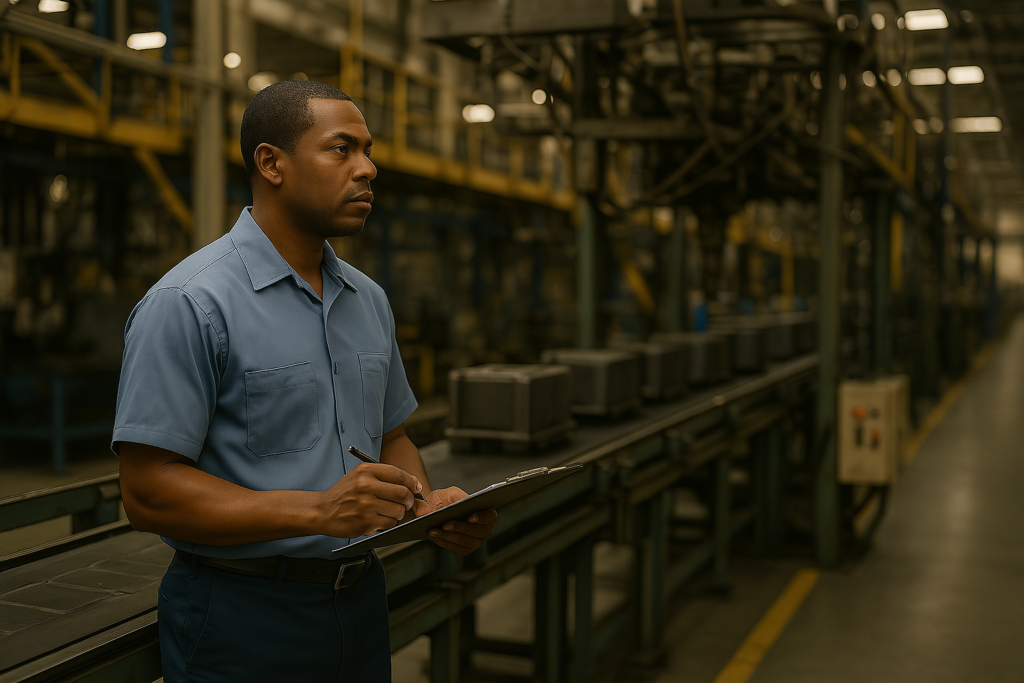
An ergonomist attends your facility during active production to observe workers performing their actual tasks at normal operating conditions and collecting real-time data for risk quantification.
Real-Time Intervention
Immediate coaching, technique correction, and equipment adjustments are provided during the session where operationally feasible.
Risk Quantification
Following the onsite assessment, validated assessment tools are applied to quantify physical demand levels and identify which specific tasks and workstations generate risk above acceptable thresholds.
Written Report Delivery
A comprehensive report documents findings by task and workstation, with prioritised recommendations, equipment suggestions, and layout modification proposals.
What You Receive After Your Assessment
Detailed Task-Level Findings
Documentation of physical demand levels by specific task, including risk ratings produced by validated assessment tools.

Equipment and Modification Suggestions
Specific suggestions for tools, mechanical assists, workstation modifications, or layout changes that reduce physical demand at the source.

Task Rotation and Job Design Guidance
Recommendations for task rotation schedules, job enlargement, or production line redesign where cumulative loading is concentrated in specific roles or stations.
Optional Follow-Up Session
A follow-up to review implementation progress and address any questions arising from the report.
Healthcare Roles We Assess
Manufacturing Roles We Assess
- Assembly line workers
- Production workers
- Machine operators
- Packaging workers
- Material handlers
- Quality control workers
- Maintenance workers
- Warehouse workers attached to production facilities
Long-Term Care and Residential Settings
- Assembly tasks at fixed and moving production stations
- Packaging and pick and pack operations
- Manual material handling across the production floor
- Machine loading and unloading
- Repetitive inspection and sorting tasks
- Overhead work and extended reach tasks
- Push and pull tasks involving carts, pallet jacks, and production equipment
- Hand tool and power tool use across maintenance and production roles
Manufacturing Environments We Serve
- Automotive manufacturing facilities
- Food manufacturing and processing plants
- Metal fabrication and manufacturing
- Plastics manufacturing
- Packaging facilities
- Assembly plants across Ontario and Québec
- Industrial production facilities of all sizes
How Manufacturing Ergonomic Assessment Supports Your Organisation
Reduce repetitive strain and manual handling injuries.
Manufacturing musculoskeletal injuries are driven by task design, not individual worker capacity. Assessment identifies the specific tasks and workstations generating cumulative load and produces targeted interventions.
Support WSIB return-to-work and modified duty planning.
A Physical Demands Analysis documents the full physical requirements of specific production roles, providing the objective baseline needed for safe return-to-work planning under Ontario's Workplace Safety and Insurance Act.
Demonstrate OHS compliance.
Under Ontario's Occupational Health and Safety Act, employers have a duty to identify and address ergonomic hazards. Documented manufacturing ergonomic assessments provide evidence that this obligation is being met.
Reduce WSIB costs over time.
Manufacturing organisations that implement structured ergonomic programs consistently report reductions in musculoskeletal injury rates, lost-time claims, and modified duty costs.
Improve production efficiency.
The task redesign and workstation modifications that reduce injury risk frequently improve throughput and reduce the fatigue-driven performance degradation that accumulates across a production shift.
Who Should Book A Manufacturing Ergonomic Assessment
- Plant managers and operations directors
- Health and safety officers and committees
- HR and return-to-work coordinators
- Disability management specialists
- Workers experiencing recurring musculoskeletal complaints in production roles
- Workers returning from repetitive strain or manual handling injuries
- Employers preparing for OHS compliance reviews
Healthcare ergonomic assessment service areas
Injury Prevention Plus delivers ergonomic assessments for Healthcare Workers across Ontario and Québec. Our registered health professionals travel directly to your facility for on-site evaluations.
Ottawa
Serving manufacturing and industrial operations across the National Capital Region and Eastern Ontario.
Toronto
Supporting automotive, food manufacturing, packaging, and industrial facilities across the GTA, including Mississauga, Oakville, and Hamilton.
Hamilton
Delivering manufacturing ergonomics services to metal fabrication, industrial, and production facilities throughout the Hamilton region.
Gatineau
Providing fully bilingual manufacturing ergonomic assessment services to production facilities across the Outaouais region and Western Québec.
Frequently Asked Questions
What is a manufacturing ergonomic assessment?
A manufacturing ergonomic assessment is an on-site evaluation of the physical demands placed on production workers during their actual tasks. Conducted by a registered health care professional or ergonomist at your facility during active production/ or at a time when you can simulate production, it identifies where task demands exceed safe thresholds and produces specific recommendations to reduce injury risk at the workstation and task level.
How is a manufacturing ergonomic assessment different from an office ergonomic assessment?
Manufacturing assessment focuses on task demands rather than workstation configuration. The tools used, the physical load measured, and the interventions recommended are specific to production environments. Validated methods including the RULA, REBA, NIOSH, Dempsey, Revised Hand Strain, Snook tables, Work(s), HandPak, Liberty Mutual equations, and the LiFFT method are applied to quantify manual handling loads, repetitive motion demands, and postural exposure in ways that office ergonomic assessment methodology is not designed to address.
Which manufacturing injuries does ergonomic assessment help prevent?
Manufacturing ergonomic assessment addresses the conditions that drive back injuries, shoulder injuries, hand and wrist injuries, repetitive strain injuries, and cumulative musculoskeletal disorders in production settings. These injuries are primarily driven by task design, workstation layout, tool selection, and work-rest structure, all of which a formal assessment evaluates directly.
Can a manufacturing ergonomic assessment support WSIB return-to-work planning?
Yes. Assessment findings, combined with a Physical Demands Analysis of the specific production role, provide the objective documentation that WSIB return-to-work coordinators and treating practitioners need to determine whether a worker can safely resume full or modified duties. This documentation supports the return-to-work process under Ontario’s Workplace Safety and Insurance Act.
How do you assess repetitive motion risk on a production line?
Repetitive motion risk is assessed using validated tools including Work(s), RULA and REBA for posture and force, combined with task timing to quantify exposure duration and frequency. The assessment identifies which specific repetitive tasks generate cumulative load above safe thresholds and what task redesign, rotation schedule changes, or mechanical assist introduction would reduce that exposure.
Do you offer multi-workstation or full production line assessments?
Yes. Injury Prevention Plus can assess multiple workstations, entire production lines, or full manufacturing facilities under a coordinated assessment program. Consolidated reporting across multiple stations supports both operational decision-making and regulatory compliance documentation.
How long does a manufacturing ergonomic assessment take?
Duration depends on the number of roles, workstations, and tasks being evaluated. A single role assessment typically takes two to three hours on-site including observation, coaching, and initial findings discussion. Multi-role or full production line assessments are scoped individually based on facility size and the number of tasks requiring evaluation.
Ready to Book a Manufacturing Ergonomic Assessment?
Serving Ottawa, Toronto, Mississauga, Oakville, Hamilton, Gatineau, and beyond, on-site across Ontario and Québec.