Our registered ergonomists are ready to help. Call us at (613) 730-1074 or book a consultation today.
Sep 19
When we think about posture, we often focus on aesthetics or comfort. But beneath the surface, our posture plays a critical role in the health of our spine especially the intervertebral discs that cushion and support each vertebra. These discs are sensitive to changes in pressure, and everyday movements like sitting, bending, and lifting can dramatically affect that pressure.
Understanding how intervertebral disc pressure (IDP) changes with posture and load is essential for preventing injury, managing back pain, and promoting long-term spinal health. This is often evaluated during an office ergonomic assessment.
It might seem intuitive that sitting is more restful than standing, but for your spine, that’s not always the case. When you sit, especially without proper lumbar support, the natural curve of your lower back flattens. This shift causes the pelvis to rotate backward and increases compressive forces on the lumbar discs. These posture risks are commonly identified during an office ergonomic assessment.
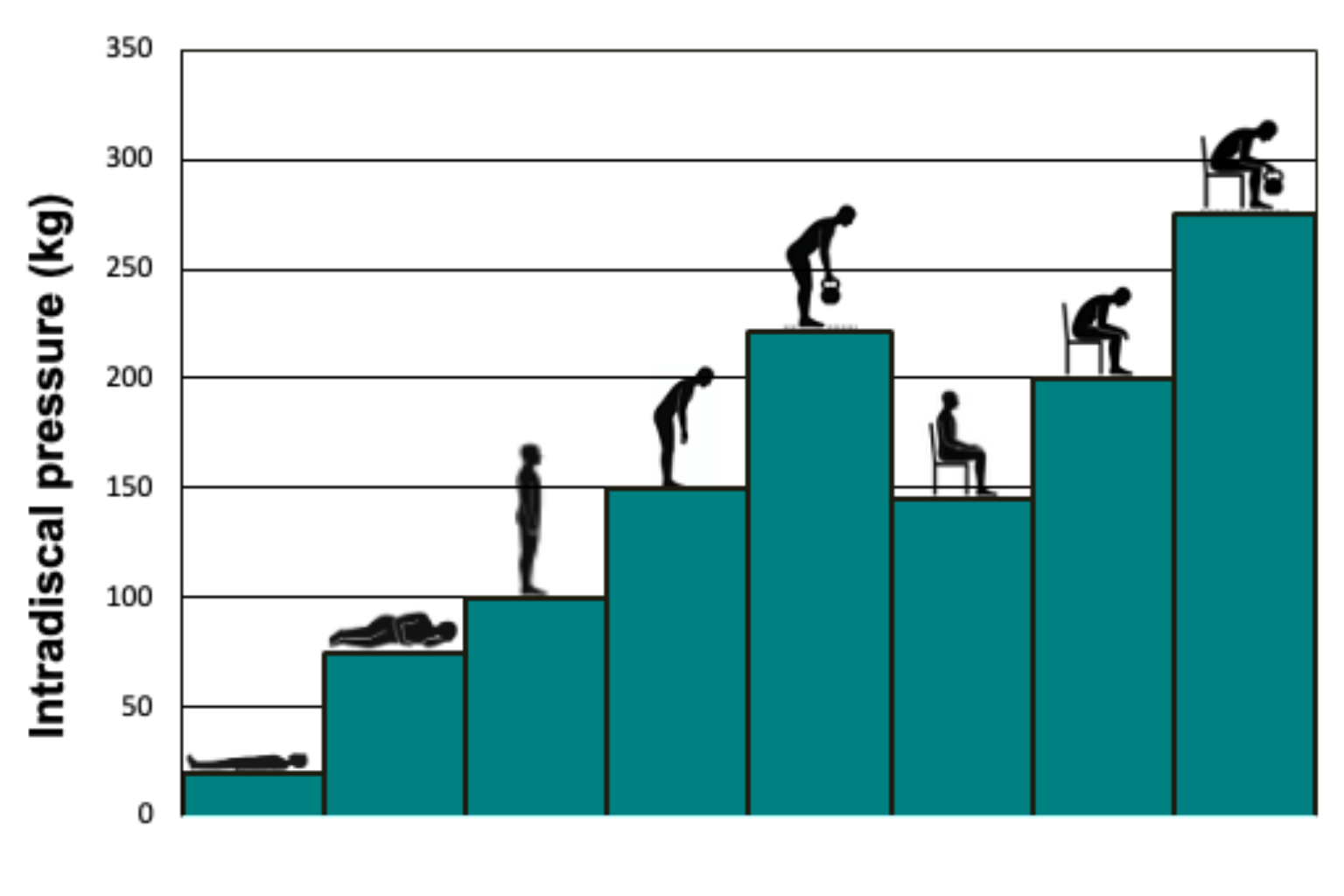
Research shows that sitting can increase disc pressure by up to 40% compared to standing. Slouched or unsupported sitting positions like sitting on a soft couch or leaning forward at a desk can raise that pressure even further. Over time, this added stress can contribute to disc degeneration and chronic lower back pain.
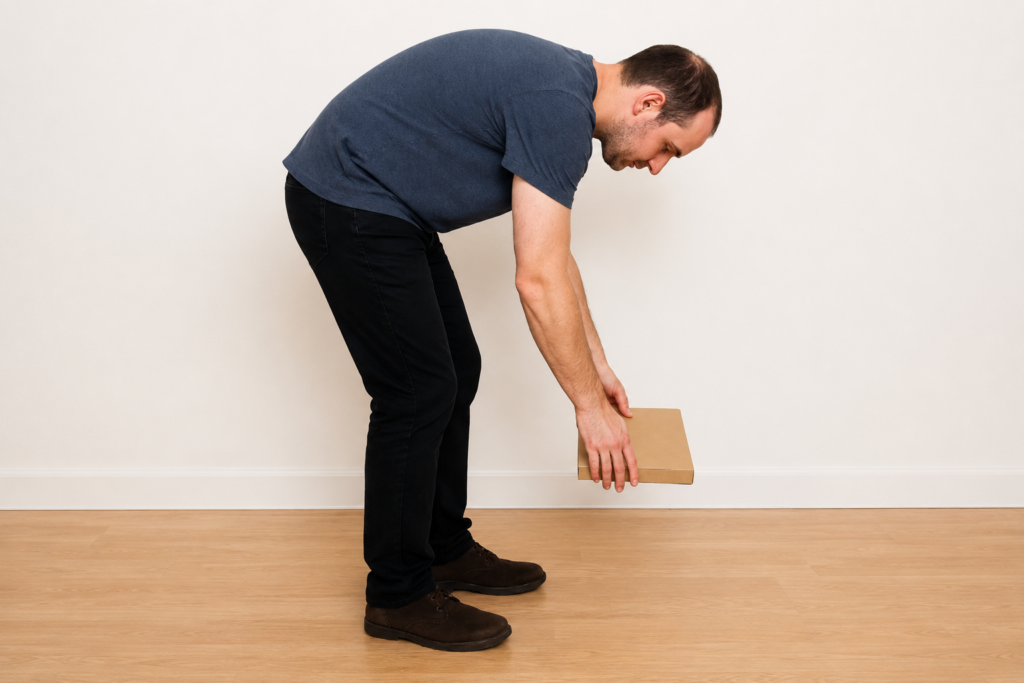
Bending forward, particularly with a rounded spine, is one of the most stressful positions for your intervertebral discs. Whether you’re tying your shoes, picking something up, or leaning over a desk, this posture compresses the front of the discs and stretches the back, increasing both compressive and shear forces. This is one of the most common posture issues identified during an office ergonomic assessment.
In a forward-flexed position, disc pressure can nearly double compared to relaxed standing. If you’re sitting and leaning forward say, working on a laptop or reading the pressure can be even higher. This posture is especially problematic when maintained for long periods, as it reduces circulation to the discs and accelerates wear.
Poor body mechanics shown during a physical demands analysis to identify workplace injury risks.
Now imagine adding a weight to that forward-flexed posture. Whether you’re lifting groceries, picking up a child, or working out, the combination of poor posture and external load can dramatically increase disc pressure.
Even moderate weights can cause a significant spike. For example, lifting a 20 kg object with a rounded back can increase disc pressure to nearly five times the baseline level experienced during relaxed standing. This kind of stress is a major contributor to disc injuries like herniation or bulging, especially when the movement is repeated or performed without proper technique. Proper lifting mechanics are often reviewed as part of an office ergonomic assessment.
High intervertebral disc pressure isn’t just a momentary concern it has long-term implications. Repeated exposure to elevated pressure can lead to:
Disc degeneration where the discs lose hydration and elasticity.
Herniated discs, where the inner gel-like core pushes through the outer layer.
Chronic low back pain, often linked to inflammation and nerve compression.
Reduced spinal mobility, affecting posture, movement, and overall quality of life.
Always use both shoulder straps to distribute weight evenly.
Properly packed student backpack with padded straps, balanced compartments, and heavy items placed close to the back for ergonomic support.”
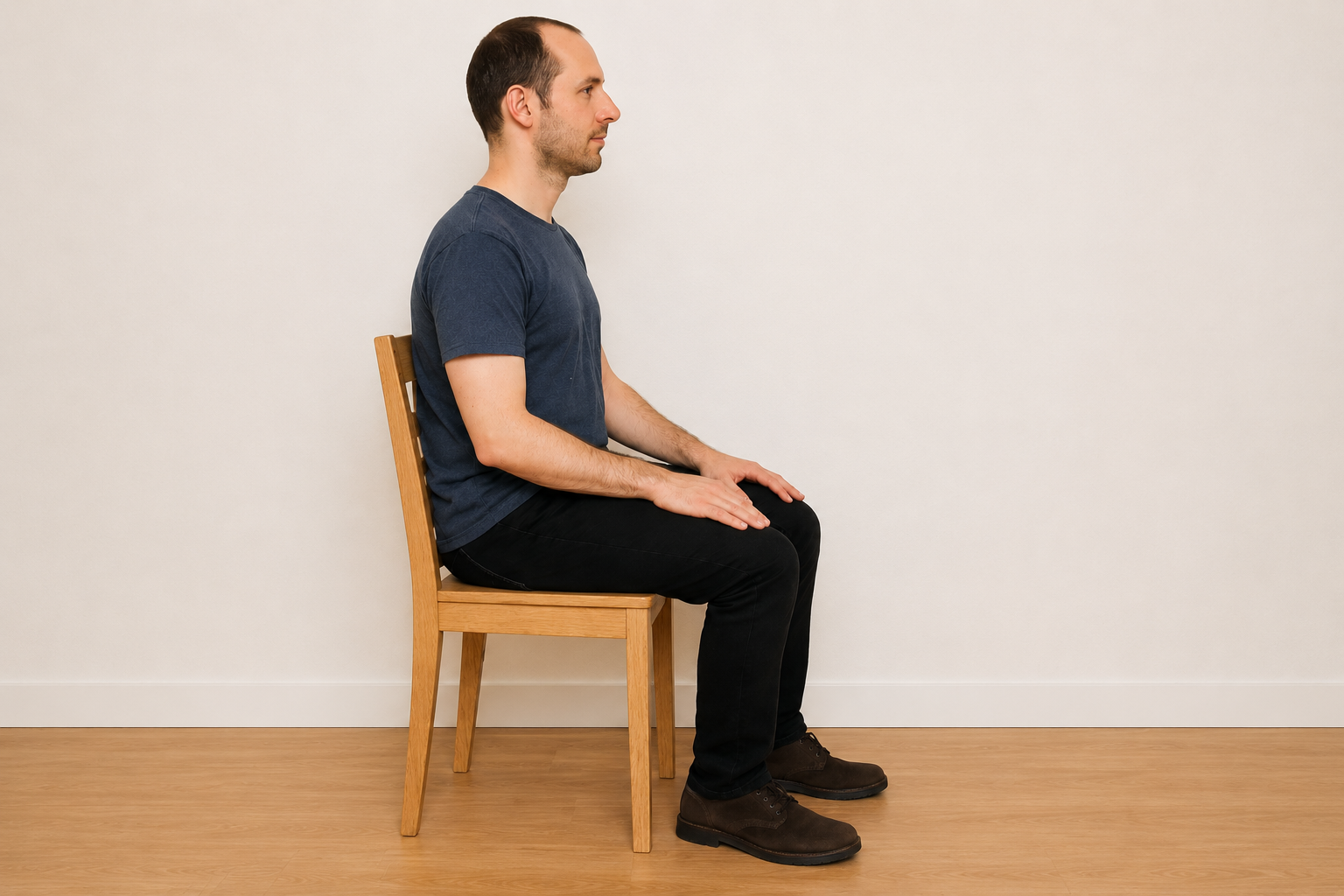
Optimal sitting posture and spine alignment for a professional office ergonomic assessment
Protecting your spine doesn’t require drastic changes just mindful adjustments to your posture and habits, and many improvements start with an office ergonomic assessment:
Sit with lumbar support to maintain the natural curve of your spine.
Avoid prolonged forward flexion, especially when seated.
Lift with a neutral spine, bending at the hips and knees rather than the back.
Use ergonomic tools like adjustable chairs and standing desks.
Take movement breaks throughout the day to relieve pressure and improve circulation.
By understanding how posture and load affect your spine, you can make smarter choices that support long-term spinal health. Whether you’re working at a desk, lifting weights, or simply sitting down to relax, small changes can make a big difference. Many of these risks can be reduced through a professional office ergonomic assessment.
The back-to-school season is an ideal time to establish healthy habits that support both academic achievement and physical well-being. By prioritizing ergonomics from desk setup to backpack safety parents and educators can empower students to thrive in and out of the classroom. For personalized guidance, book an ergonomic consultation with Injury Prevention Plus to create a study or work setup that supports long-term health and comfort. We offer practical, tailored solutions, including virtual consultations, to help you apply effective ergonomics in real-life environments.
References
1: American Academy of Pediatrics. Backpack Weight: How Heavy Is Safe? AAP Grand Rounds
2: Lavigne, V. Backpack Safety Guidelines. Journal of Clinical Chiropractic Pediatrics. JCCP PDF
Good posture helps distribute pressure evenly across the spine and reduces stress on intervertebral discs. Poor posture over time can contribute to back pain and disc problems.
Home ergonomics refers to setting up a study space at home with proper seating, desk height, and screen positioning to support healthy posture and reduce strain.
Forward bending, slouching, and lifting heavy objects with poor technique can significantly increase disc pressure and injury risk.
An office ergonomic assessment helps identify posture risks, workstation issues, and movement habits that may contribute to discomfort and long-term injury.
Simple improvements include:
Maintaining neutral posture
Using lumbar support
Keeping screens at eye level
Taking movement breaks
Using ergonomic equipment
Our registered ergonomists are ready to help. Call us at (613) 730-1074 or book a consultation today.