Our registered ergonomists are ready to help. Call us at (613) 730-1074 or book a consultation today.
Can Stretching Prevent Workplace Injuries? Understanding the Role of Ergonomic Principles
Oct 31
Introduction
Stretching gets handed out as the answer to nearly every workplace ache. Stiff neck after a day at the desk? Try this stretch. Lower back sore by Thursday? Do this one before your shift. Wrist complaining after hours on the keyboard? There’s a routine for that as well.
None of it is wrong, and stretching does have real value. The trouble starts when it gets used in place of something more important.
A stretch deals with how your body feels after a physical demand. It does very little about the demand itself. If the monitor makes you lean forward, the tool bends your wrist or you keep lifting throughout the shift, stretching will not fix the problem. The same strain remains. It just adds another task to your morning. Once you understand what ergonomic principles say about this, you tend to look at workplace health very differently.
What can stretching actually do?
Stretching helps your muscles and joints move more freely. Regular stretching can reduce tightness, help your body recover after hard work and support overall wellbeing.
Workers who stand or move all day may feel less tired when they stretch between tasks. Those who stay in one position for long periods should take short movement breaks to give their bodies a chance to recover.
So it’s a useful support. The key word is support. It sits beside a plan to manage physical demand and can’t stand in for one. There are a few jobs people keep asking stretching to do that it simply can’t:
- Fix a workstation that loads the neck all day. If the monitor sits too low, the head tips forward for hours. A stretch at the end of the shift won’t undo that. Raising the monitor will.
- Reduce the force in a task. A warehouse worker lifting from floor level over and over builds up spinal compression with every lift. Stretching doesn’t change the lift height, the weight or the number of repetitions, and those are what drive the risk.
- Replace recovery time. The body needs real rest between hard periods. Thirty seconds of stretching can’t match a genuine change in physical demand across the shift.
- Deal with contact stress, vibration or badly designed equipment. Forearms on a sharp desk edge, power tools that shake, handles that force an awkward grip: stretching doesn’t touch any of that

Why do so many workplaces mix this up?
Because stretching is easy. It needs no budget sign-off, no facilities team and no change to how work gets done. A supervisor can run a five-minute group stretch tomorrow morning without any outside help.
Real ergonomic changes take more effort. Someone has to work out what is driving the load, change the equipment or the task, and sometimes push the request through procurement. So stretching programs get started because they’re simple, and not because they work best. Then the injury numbers fail to improve the way everyone hoped.
This isn’t an argument against stretching. It’s about knowing what it can and can’t do, so it becomes one part of a wider approach and not the whole thing.
What do ergonomic principles say about preventing strain?
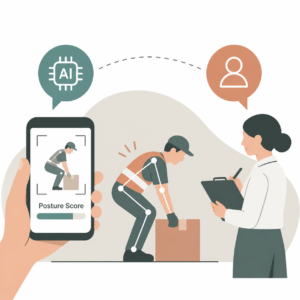
Ergonomic principles for preventing musculoskeletal injury look at the work environment, the task design and the demands placed on the body. They don’t focus on training the body to put up with those demands.
The logic is simple. Risk builds when the demand is more than the body can absorb and recover from. The most direct way to lower the risk is to lower the demand, and making the body tougher comes a distant second. In practice that means:
- Workstations set up for the person using them. Screens at the right height, keyboards within easy reach, chairs adjusted to the individual and not left as the last person set them.
- Task design that limits repetition. Vary the physical demands across a shift and build recovery into the work, instead of leaning on end-of-day stretching to cancel out hours of continuous loading.
- Tools and equipment that fit the job and the worker. That cuts grip force, awkward positions and vibration, which drive a lot of upper limb and back problems.
- Scheduling that accounts for physical demand. The people taking the heaviest loads need proper recovery between them.
A stretching program covers none of these. A structured ergonomic analysis or an office ergonomic assessment finds and fixes all of them.
What about stretching for office workers?
Desk work is a low-level demand that never lets up. The head sits forward for hours. A mouse that’s just out of reach can leave one shoulder raised. If the keyboard is too high for the seated elbow, the wrists may bend while typing.
These are set-up problems. They cause the neck tension, shoulder complaints and sore forearms that office staff treat as a normal part of the day. Stretching at lunchtime gives some temporary relief and leaves the cause in place for tomorrow.
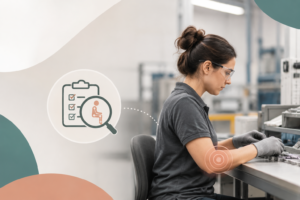
An ergonomic assessment for office workers checks how one person’s workstation matches their body and their tasks, finds what is creating the load and changes it at the source. The improvement lasts because the cause has changed, and not only the symptom. Injury Prevention Plus takes a closer look at the work being done across Ottawa, Toronto and Gatineau. With the help of an ergonomic assessment in Toronto, the team understands what may be putting stress on the body and recommends practical changes to the workstation or task.
Conclusion
Stretching has a proper place as a support alongside the structural changes that actually cut exposure.
Movement breaks that interrupt long static postures are well supported by occupational health research. They work best when they’re built into the work as planned postural variation, and not bolted on as a separate daily routine that ignores the workstation and the task.
Stretching after physically heavy work can help recovery too, as long as the task demands are also being looked at. Someone lifting heavy material all shift gets some benefit from stretching, but far more once the lift heights, frequencies and rest periods have been reviewed.
The workplaces with the best long-term results do both. They fix the demand at its source, and they encourage movement that supports recovery inside that improved setting. Any set of ways to avoid injury that relies on stretching alone will level off quickly. Fix the environment first, add movement on top, and the drop in complaints starts showing in the injury data.
Injury Prevention Plus carries out ergonomic analysis and office ergonomic assessments across office, industrial, healthcare, vehicle and field environments throughout Ottawa, Gatineau, Toronto and surrounding regions. Every assessment is done by registered healthcare professionals with over 33 years of applied experience.
Book an assessment to see what your work environment is really doing to people’s bodies, and what would reduce it at the source.
Frequently Asked Questions
Can stretching prevent workplace musculoskeletal injuries?
Stretching can support physical recovery and reduce the perception of tightness but it does not address the physical demands that drive musculoskeletal injury. Ergonomic principles focus on reducing the demand at its source through workstation configuration, task design, and work organisation rather than increasing the body’s tolerance for poorly designed working conditions. Stretching works best as a complement to structural ergonomic changes, not a replacement for them.
What do ergonomic principles say about reducing physical strain at work?
Ergonomic principles address the physical environment and the tasks being performed rather than the body performing them. The focus is on workstation configuration matched to the individual, task design that limits sustained and repetitive high-demand movements, equipment that reduces awkward positioning and excessive force requirements, and work organisation that provides adequate recovery between demanding exposures. These structural changes reduce injury risk more effectively than any preparation or recovery activity performed independently of them.
How does an office ergonomic assessment differ from a general health and safety review?
A general health and safety review covers a broad range of workplace hazards. An office ergonomic assessment focuses specifically on the physical demands of a worker’s role and how their workstation configuration, task patterns, and work organisation interact with their physical capacity. It uses validated assessment methodology to identify specific risk factors and produces recommendations targeted to the actual conditions of that individual’s working environment.
What are the most effective ways to avoid injury in a desk-based role?
The most effective ways to avoid injury in a desk-based role involve workstation configuration matched to the individual’s body dimensions and task demands, task variation that prevents sustained loading in a single posture, brief postural changes at regular intervals throughout the day, and early reporting of discomfort before it develops into a formal complaint. Stretching can support these measures but does not substitute for the workstation and task changes that address the physical demand directly.
When should an organisation book an ergonomic assessment rather than running a stretching program?
When musculoskeletal complaints are recurring despite existing wellness programs, when injury rates are not improving, or when workers report persistent discomfort that correlates with specific tasks or workstation conditions. A stretching program can coexist with an ergonomic assessment program but should not be used as a reason to defer one. The assessment identifies what is driving the physical load. The stretching program supports recovery within an environment that has been improved to reduce that load.