Our registered ergonomists are ready to help. Call us at (613) 730-1074 or book a consultation today.
How to Prioritize Ergonomic Investments: Start With Ergonomic Risk Assessments
Nov 06
Introduction
Somebody in the warehouse office says their shoulders are killing them. Six new chairs get ordered. Done. Then spring rolls round, a different team starts grumbling about their backs, and nobody can quite remember what the chairs were meant to fix.
It happens a lot. Money isn’t the issue, and the goodwill is usually genuine. The order of things is what trips people up. If nobody has checked where the real risk sits, the budget follows whoever complained loudest, and the folks carrying the heaviest load are often the ones who keep quiet. So here’s how to decide what to fix first, what can wait, and where ergonomic risk assessments come in.
Why do ergonomic investments matter?
Because strain at work creeps in slowly. Catch it early and it’s cheap. Catch it after an injury and it isn’t.
Nobody gets hurt the day a monitor ends up two inches too low. It’s a stiff neck by Friday, then headaches, then they stop mentioning it, since nothing changed last time they did. Production floors go the same way. Do a task a few hundred times a shift and it starts as tiredness, turns into soreness, and ends with a week off.
Ignore all that and the bill turns up somewhere else:
- Time off and modified duty
- A WSIB claim, with its pile of paperwork
- Training a replacement for the experienced person whose shoulder finally gave out
- Slower, sloppier work from people who are sore by mid-afternoon
That last one never shows up in the accounts, but it’s real. And the flip side matters too. People who go home without aches tend to stay. Try hiring for a physically hard role and you’ll know how much that’s worth.

Why do so many workplaces mix this up?
Mostly because the money’s gone before anyone has measured the problem.
A good chair at a badly set up desk does very little. A new lift aid on the wrong task does even less. One office we know bought fully adjustable chairs for every desk and found, months on, that nobody had touched a lever. Perfectly fair purchase. Nobody had thought about how people would actually use them.
Factories have their own version. The line that complained gets a shiny new lift aid, and a quieter station with heavier daily exposure gets nothing at all. A manufacturing ergonomic assessment looks across the whole floor, so the noisiest station doesn’t hog the attention.
The same slips turn up again and again:
- Picking equipment first and checking the fit later
- Buying something once and never asking whether it helped
- Rebuilding a workstation when the real cause was the pace of the work or how long the shift runs
- Spending on the loudest complaint and not the biggest risk
How do you decide which risks to fix first?
Start with what you’ve already got: complaints, injury and absence records, and what you can see people doing. Then rank each problem by how many people it touches, how long they’re exposed and how hard the task is on the body.
You can do a rough version before booking any ergonomic risk assessments. Pull your injury, WSIB and modified duty records and split them by role. See if the same body part keeps cropping up in the same job. Then walk the floor or the office and look for workarounds. A cushion taped to a chair. A stack of boxes under a monitor. Those are people quietly solving a problem on their own.
After that, ask five things about each task:
- How many people do it?
- How often, and for how long?
- How heavy, awkward or forceful is it?
- Do they get any recovery between repetitions?
- How cheap and easy is the fix?
Something that bothers twenty people daily goes ahead of something that bothers one person occasionally. Even so, a cheap fix for a small group is worth doing quickly. It costs next to nothing, and people notice when you listen.
Which changes cost little and work fast?
Layout, setup and scheduling. Usually the cheapest, and often the most useful. Here’s where most people start:
- Put the things people grab all day between knee and shoulder height
- Set up a workstation for whoever’s actually using it, especially on shared desks
- Rotate people between tasks that load different parts of the body
- Fix the cart with the stiff wheel that everyone’s been complaining about for a year
None of that needs a purchase order. It also tells you something. Once the cheap fixes are in, whatever’s still causing trouble is where bigger spending might be justified.
When is bigger spending worth it?
When the cheaper fixes have been tried or ruled out and the same task keeps hurting a lot of people. That’s when a redesigned workstation, a lifting aid or a different way of loading a machine starts to make sense.
Before signing off anything large, ask three things. What exact risk does this remove? How many people does it protect? How will we know it worked? If nobody can answer, go back and find out more first.
Get ergonomics involved early on new projects as well. A new production line or an office fit-out is far easier to get right on the drawing board than to fix once people have moved in.
How do ergonomic risk assessments help you spend smarter?
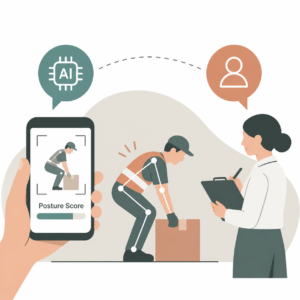
They swap opinion for measurement. An assessor watches the real work, measures posture, force, repetition and recovery, then ranks the risks so you can see which fixes count most.
In a proper ergonomics assessment, the assessor watches people at their normal pace and asks what they find hard. Tools like REBA, RULA and the LiFFT method put numbers on what they see. The ergonomic analysis behind the report then explains why a task is a problem and what would change it.
What you come away with:
- A ranked list of risks
- A clear split between cheap changes and bigger ones
- Recommendations tied to the task that was actually watched, not generic advice
- Records that help later with return-to-work and accommodation conversations
Which assessment you need depends on the work:
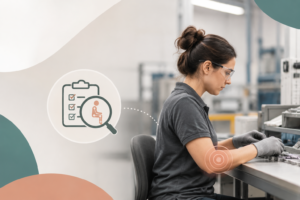
- Office ergonomic assessment: desks, screens and shared workstations
- Industrial ergonomic assessment: lifting, reaching, tools and task design
- Manufacturing ergonomic assessment: repetition, machine loading and line layout on plants and production lines
- Physical demands analysis: what a role physically asks of a person, which helps with job matching and getting people back to work
Some organisations hire an ergonomic consultant once and that’s enough. Others use ergonomic consulting as an ongoing thing, so the same person can check whether earlier changes held and spot new risks when equipment or targets change. The second option tends to suit bigger sites, where something’s always moving.
Looking for an ergonomic assessment Toronto businesses can book? Injury Prevention Plus also works across Ottawa, Gatineau and the surrounding regions.
Conclusion
Pick one role or area where complaints or injuries bunch up. Get it assessed, fix the top items, and use what you learn to plan the next round.
There’s no need to assess the whole organisation in one go. One well-chosen group gives you real findings, a sense of what changes cost, and something solid for the next budget conversation. Plenty of finance teams find that an easier sell than a big programme with no clear starting point.
Injury Prevention Plus carries out ergonomic risk assessments across office, industrial, healthcare, vehicle and field environments. Every assessment is done by a registered healthcare professional, with over 33 years of experience behind the practice.
Book an assessment and find out where your ergonomics spending would do the most good.
Frequently Asked Questions
Where should a company start when the ergonomics budget is small?
Start with one role or area where complaints, injuries or absence cluster. Get it assessed, fix the highest-ranked items, and use the results to plan what comes next. This gives you real findings without committing to a large programme.
How do ergonomic risk assessments help decide what to buy?
They show which tasks carry the most risk and why. That means you buy equipment to solve a measured problem instead of guessing. Some findings turn out to need only a layout or scheduling change, which saves money.
What is the difference between an ergonomic analysis and a physical demands analysis?
An ergonomic analysis looks at how a task loads the body and what could reduce that load. A physical demands analysis records what a job physically requires, such as lifting, reaching, standing and repetition. The first helps you decide what to change. The second helps with job matching and return-to-work planning.
How is an ergonomic assessment Toronto businesses book different from a general safety audit?
A general safety audit covers many hazards such as slips, machinery and chemicals. An ergonomic assessment focuses on the physical demands of the work and how they affect muscles, joints and posture. It uses measurement tools to rank those risks.
How soon will we see results after making ergonomic changes?
It depends on the change. Simple fixes like adjusting workstations or moving items to a better height can ease discomfort within weeks. Track complaints, absence and modified duty over the following months to see whether the change is holding. Larger changes take longer to show up in the records.